
May 12, 2026
Is James Hardie Siding Worth It for St. Louis Homes?
James Hardie fiber cement siding installed on a typical St. Louis home costs $15,000 to $25,000, roughly 30% to 50% more than vinyl. But it lasts 30 to 50 years (versus 20 to 30 for vinyl), resists hail damage better, holds paint for 15 years with the ColorPlus factory finish, and is the only siding brand that engineers a product line specifically for Missouri’s freeze-thaw climate. The HZ5 product line is the specification for St. Louis homes. Here is what you need to know before investing.
How Much Does James Hardie Siding Cost in St. Louis?
Installed pricing for James Hardie HardiePlank lap siding in the St. Louis market runs $10 to $15 per square foot, including materials and labor (based on 2026 data from Angi and HomeGuide). For a home with 2,000 square feet of exterior wall space, that puts the total project between $15,000 and $25,000. The national average is $21,300 according to Angi’s April 2026 data.
| Category | James Hardie Fiber Cement | Vinyl Siding |
|---|---|---|
| Material cost per sq ft | $2.50 to $6.00 | $1.50 to $4.00 |
| Installed cost per sq ft | $10 to $15 | $4 to $8 |
| Total project (2,000 sq ft) | $15,000 to $25,000 | $8,000 to $16,000 |
| Expected lifespan | 30 to 50 years | 20 to 30 years |
| Warranty (substrate) | 30 years, non-prorated, transferable | Lifetime, prorated |
| Warranty (finish) | 15 years (ColorPlus) | N/A (color is through-body) |
| ROI at resale | ~80% (Angi 2026) | ~65 to 70% |
Labor makes up 50% to 65% of the total cost. James Hardie is heavier, harder to cut (requiring diamond-tipped blades and silica dust management equipment), and takes longer to install correctly. A qualified installer costs more than a general siding crew, but improper installation can void the 30-year warranty entirely.
What Is the HZ5 Product Line, and Why Does It Matter in St. Louis?
James Hardie is the only siding manufacturer that engineers different product formulations for different climate zones. Missouri falls in the HZ5 zone (zones 1 through 5), which is designed for climates with freezing temperatures, snow, ice, and extreme seasonal temperature variation. That describes St. Louis exactly.
The HZ5 formulation includes three features that matter for St. Louis homes:
Reduced water absorption rate. HZ5 boards absorb less moisture than standard fiber cement, which directly addresses St. Louis’s 42 inches of annual rainfall and high summer humidity. Less moisture absorption means less risk of freeze-related cracking when temperatures drop.
Improved freeze-thaw resistance. St. Louis typically experiences 30 to 40 freeze-thaw cycles per winter. Each cycle causes absorbed moisture to expand and contract, stressing siding materials. The HZ5 formulation resists the shrinking, swelling, and cracking that this cycling produces.
Drip edge profile. HZ5 HardiePlank lap siding includes a modified bottom edge that channels water away from the board below, improving water management at every horizontal joint. This is a design feature not found on the HZ10 product line used in warmer climates.
When getting estimates in the St. Louis area, confirm that your contractor is quoting HZ5 product, not HZ10. Hardware stores and supply chains occasionally carry the wrong zone product. A James Hardie Preferred or Elite Preferred contractor will know the difference and source correctly.
How Does James Hardie Handle St. Louis Hail?
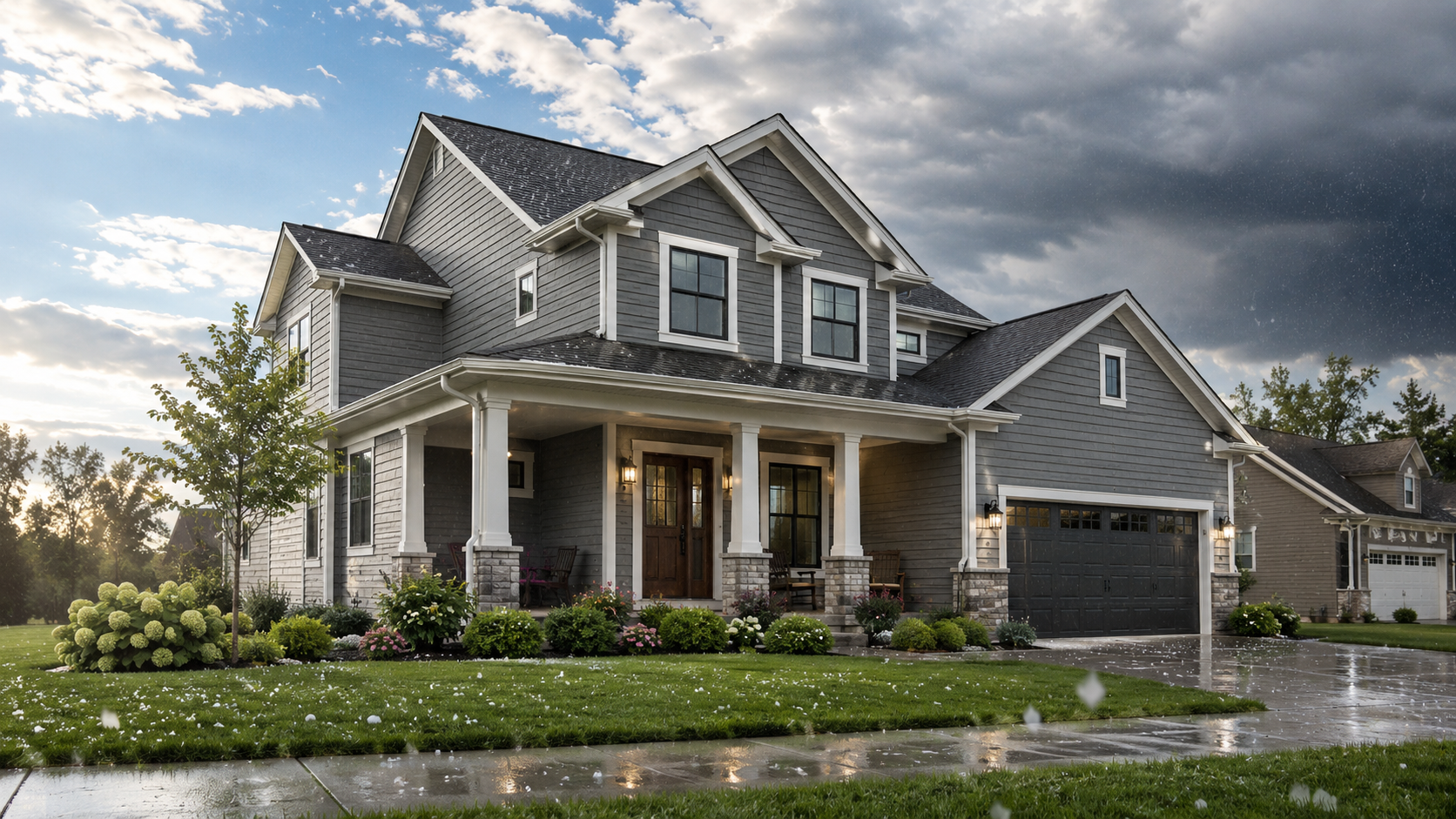
Hail resistance is one of the strongest arguments for fiber cement siding in the St. Louis market. Hail season runs April through June, and significant events with stones exceeding one inch in diameter hit St. Louis County regularly.
James Hardie fiber cement is dense and rigid. Hailstones that crack or shatter vinyl panels are more likely to bounce off fiber cement without leaving visible damage. This does not make it indestructible, but in side-by-side comparisons after major hail events, fiber cement siding consistently sustains less damage than vinyl on the same street.
Vinyl, by contrast, becomes more brittle in cold temperatures. A hail event in March or April, when temperatures can still drop below 40 degrees Fahrenheit in St. Louis, can crack vinyl panels that would have survived the same impact in July. Fiber cement does not have this temperature-dependent vulnerability.
If you are filing a storm damage insurance claim, a fiber cement exterior is less likely to trigger a full siding replacement claim than vinyl, because localized damage can often be repaired by replacing individual boards rather than entire wall sections.
What Maintenance Does James Hardie Siding Need in St. Louis?
James Hardie markets fiber cement as “low maintenance,” and compared to wood, that is accurate. Compared to vinyl, it requires slightly more attention. Here is a realistic maintenance schedule for a St. Louis home:
Annual: Inspect caulking at all joints, corners, and window/door trim. St. Louis temperature swings cause caulk to expand and contract, and gaps develop over time. Recaulk as needed. Also inspect for any impact damage from storms.
Every 1 to 2 years: Wash the siding with mild soap and a garden hose. Pressure washing is acceptable if you keep pressure under 1,500 PSI and use a wide fan tip kept at least 6 feet from the wall (per James Hardie’s care guidelines). North-facing walls in tree-heavy neighborhoods like Kirkwood, Webster Groves, and Wildwood will accumulate mildew faster and may need annual washing.
Every 15 to 20 years: Repaint if you chose primed (field-painted) boards. ColorPlus factory-finished boards carry a 15-year finish warranty and typically last longer before needing a fresh coat. Repainting costs $1 to $2 per square foot and gives the siding a like-new appearance, something you cannot do with faded vinyl.
One important note from the manufacturer: James Hardie siding should not come in direct contact with deicing salts, which can damage the finish. If your home has siding near walkways or driveways that get salted in winter, use sand or gravel instead of salt in those areas.
Is James Hardie Worth the Extra Cost Over Vinyl?
The answer depends on three factors specific to your situation:
How long you plan to stay. If you are in the house for 10 years or more, the total cost of ownership for James Hardie approaches parity with vinyl because you will not need to replace it. A vinyl installation may need replacement at year 20 to 25. James Hardie is still performing at year 30.
Your home’s architectural style. On homes in architecturally distinctive St. Louis neighborhoods (the Craftsman bungalows in Webster Groves, the colonials in Kirkwood, the custom builds in Chesterfield), fiber cement’s matte finish and deeper shadow lines look substantially more like real wood than vinyl does. In neighborhoods where vinyl is the prevailing standard, the aesthetic premium may matter less.
Hail exposure. If your home is in western St. Louis County (Ballwin, Wildwood, Chesterfield, Ellisville), where storms arriving from the west hit first, the hail resistance advantage of fiber cement is worth more because your siding absorbs more cumulative hail exposure over its lifetime.
Many homeowners split the difference: James Hardie on the front facade and high-visibility sides, vinyl on the rear and less-visible elevations. This balances curb appeal with budget. Family First Exteriors installs both materials and can help you plan a combination approach that makes sense for your home.
About Family First Exteriors
Family First Exteriors, LLC installs both vinyl and James Hardie fiber cement siding, soffit, and fascia for homeowners across the greater St. Louis area. The company also handles roofing, storm damage and insurance claims, gutter systems, and replacement windows. In business since 2002. A 20% discount is available to veterans, first responders, and senior citizens. Financing available.
15009 Manchester Rd, Ste 261,
Ballwin,
MO
63011
Phone: (314) 255-8151
Request a Free Estimate
Frequently Asked Questions
How long does James Hardie siding last?
James Hardie fiber cement siding lasts 30 to 50 years with proper installation and basic maintenance. The substrate carries a 30-year non-prorated, transferable warranty. The ColorPlus factory finish is warranted for 15 years. Many installations outlast the warranty period with no major issues, particularly when installed by a certified contractor.
What James Hardie product is right for St. Louis?
St. Louis falls in the HZ5 climate zone. The HZ5 product line is engineered for freezing temperatures, snow, ice, and seasonal temperature swings. It features reduced water absorption, improved freeze-thaw resistance, and a drip edge profile for better water management. Always confirm your contractor is quoting HZ5, not HZ10.
Is James Hardie siding better than vinyl in hail?
Yes. Fiber cement is denser and more rigid than vinyl, making it more resistant to hail impact. Vinyl becomes brittle in cold temperatures, increasing its vulnerability during early-season hail events in March and April. After major St. Louis hail storms, fiber cement siding typically sustains less visible damage than vinyl on the same block.
Can you paint James Hardie siding?
Yes. James Hardie fiber cement accepts exterior paint and holds it longer than wood surfaces. Use 100% acrylic latex paint for the longest-lasting results. ColorPlus factory-finished boards typically need repainting after 15 to 20 years. Field-painted (primed only) boards need repainting every 10 to 15 years depending on sun exposure and climate.
Does James Hardie siding increase home value?
According to Angi’s 2026 data, James Hardie siding returns approximately 80% of its cost at resale, adding roughly $17,000 in value to an average-sized home. It consistently outperforms vinyl in return on investment because of its longer lifespan, lower maintenance, and stronger curb appeal.
Does James Hardie siding require a special installer?
James Hardie does not legally require a certified installer, but using one is strongly recommended. Certified contractors (Preferred or Elite Preferred) receive specialized training and can offer extended warranty coverage. Improper installation, including incorrect fastening, missing flashing, or unprimed cut edges, can void the 30-year product warranty entirely.
Considering James Hardie Siding for Your St. Louis Home?
Family First Exteriors installs both vinyl and James Hardie fiber cement siding. We will evaluate your home, discuss your options, and give you a clear estimate with no pressure.
(314) 255-8151 | Request Your Free Estimate Online
Serving Ballwin, Kirkwood, Webster Groves, Creve Coeur, Chesterfield, Wildwood, Des Peres, Ellisville, Maplewood, and the entire St. Louis metro. 20% discount for veterans, first responders, and seniors.