
February 17, 2026
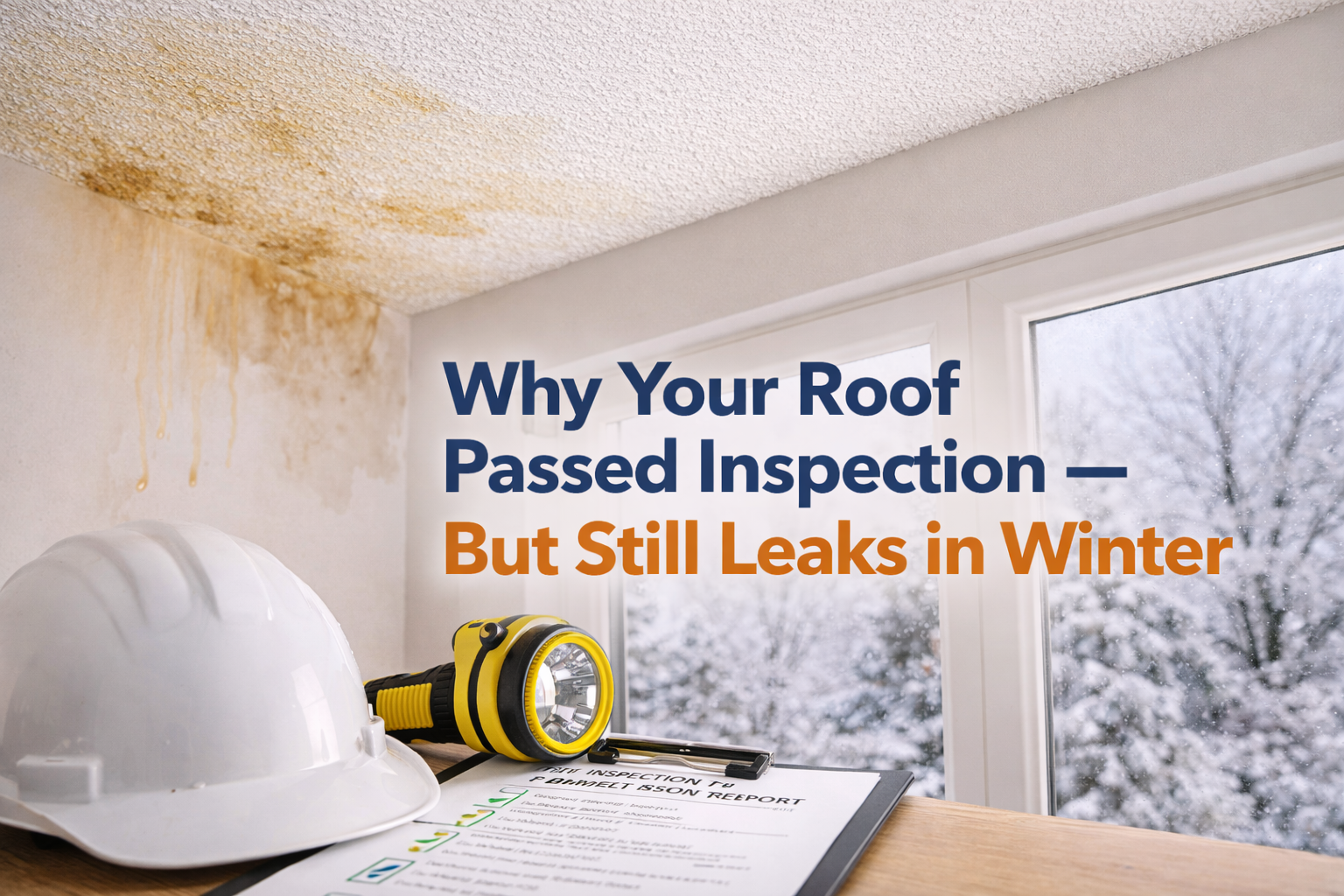
Why Your Roof Passed Inspection — But Still Leaks in Winter
You had your roof inspected.
The shingles looked fine.
No missing tabs.
No visible flashing damage.
No obvious cracks.
Yet when winter arrived, water showed up on your ceiling.
It feels contradictory. If the roof “passed,” why is it leaking?
The answer is uncomfortable but important: a standard roof inspection does not always catch winter-specific failure points. And many winter leaks aren’t caused by shingle damage at all.
Let’s break down why this happens — especially in St. Louis homes — and what most inspections overlook.
Winter Leaks Are Often Not Shingle Failures
Traditional roof inspections focus heavily on:
- Missing or damaged shingles
- Nail pops
- Flashing condition
- Roof penetrations
- Surface wear
- Storm damage
That works well for wind or hail damage.
But winter leaks often come from thermal and moisture behavior, not surface damage.
A roof can look structurally sound and still leak when temperatures fluctuate between freezing and thawing.
The Freeze–Thaw Factor Most Inspections Miss
In St. Louis, winter isn’t consistently cold. We experience:
- Daytime thaws
- Nighttime refreezes
- Rain followed by freezing temperatures
- Snow that melts and refreezes repeatedly
This cycle stresses every seam, joint, and penetration on a roof.
Water enters microscopic gaps during a thaw, then expands when frozen. That expansion widens gaps over time.
An inspection done in dry weather may not reveal these subtle openings.
Ice Dams Don’t Show Up in Fall Inspections
Many winter leaks are caused by ice dams — not by roofing material failure.
An inspector in October may find:
- Good shingles
- Proper flashing
- Clean valleys
But ice dams form when:
- Warm attic air melts snow
- Meltwater flows to cold eaves
- Ice builds up and blocks drainage
- Water backs up under shingles
The roof didn’t fail. The attic heat did.
If insulation and ventilation weren’t evaluated, the real problem was never identified.
Flashing Can Be Technically “Intact” But Functionally Compromised
Flashing is one of the most common winter leak sources.
Even when flashing looks secure, winter movement can expose weaknesses:
- Brick and metal expand at different rates
- Chimneys radiate heat
- Parapet walls absorb moisture
- Sealants shrink in cold temperatures
In older St. Louis brick homes — especially in neighborhoods like Soulard, Tower Grove, Benton Park, and University City — flashing is under constant movement stress.
An inspection may confirm the flashing is “present and attached,” but not detect micro-gaps that only leak under winter pressure.
Window and Wall Leaks Often Mimic Roof Leaks
Another reason roofs “pass” inspection but still leak:
The water isn’t coming from the roof.
In brick homes, water can:
- Enter deteriorated mortar joints
- Slip behind window flashing
- Travel inside wall cavities
- Appear near ceilings
The timing — during snow or rain — makes homeowners assume the roof is failing.
But sometimes the roof is doing its job.
Without checking masonry, window flashing, and wall penetrations, the source remains hidden.
Attic Condensation Is Frequently Misdiagnosed
In winter, warm air rises into the attic and condenses on cold roof decking.
This moisture can drip downward and appear as a roof leak.
The roof covering is intact.
The decking is wet from interior condensation.
Common causes include:
- Poor attic ventilation
- Blocked soffit vents
- Insufficient insulation
- Air leaks around recessed lighting
- Bathroom fans venting into the attic
A roof inspection focused only on exterior materials may not identify this issue.
Low-Slope and Valley Areas Behave Differently in Winter
Roofs with:
- Complex valleys
- Dormers
- Low-slope sections
- Additions
- Parapet walls
…are more vulnerable to winter leaks even if materials are technically sound.
Snow accumulates differently in these zones. Water drains slower. Ice forms faster.
An inspection that doesn’t analyze snow load behavior may miss future leak points.
What a True Winter Roof Inspection Should Include
A winter-aware evaluation goes beyond surface materials. It includes:
- Attic insulation measurement
- Air sealing assessment
- Ventilation balance review
- Thermal imaging (when possible)
- Flashing movement inspection
- Brick and masonry review
- Gutter and eave analysis
- Ice dam pattern history
This is a building envelope evaluation — not just a shingle check.
Why This Happens Frequently in St. Louis Homes
St. Louis housing stock is uniquely mixed:
- Older brick construction
- Balloon framing in historic homes
- Additions built decades after original construction
- HVAC systems retrofitted into attics
- Mixed insulation standards
Homes in Clayton, Kirkwood, University City, Bevo Mill, and The Hill often have different insulation thicknesses in different sections of the same attic.
That uneven thermal control creates leak patterns that inspections may not predict.
The Emotional Frustration Is Real
Homeowners feel misled when:
“The roof is fine.”
…turns into:
“Why is there water on my ceiling?”
But often, the inspector didn’t do anything wrong. They evaluated the roof based on visible material integrity.
Winter leaks are rarely visible until winter conditions activate them.
The Real Question to Ask
Instead of asking:
“Is my roof damaged?”
Ask:
“Is my attic and roof system thermally balanced?”
That question leads to the real solution.
Why Fixing the Leak Without Diagnosing the Cause Fails
Patching a leak in winter without addressing:
- Heat loss
- Ventilation imbalance
- Ice dam formation
- Masonry moisture
- Flashing movement
…means the problem returns next season.
Stopping winter leaks requires understanding how your entire home handles heat and moisture.
The Bottom Line
A roof can pass inspection and still leak in winter because the leak isn’t always about roofing materials.
It’s about:
- Heat movement
- Moisture behavior
- Freeze–thaw stress
- Structural transitions
- Air pressure differences
Winter reveals weaknesses that dry-weather inspections cannot always see.
If your roof passed inspection but you’re still dealing with winter leaks, the next step isn’t another patch — it’s a deeper diagnostic.
Family First Exteriors provides full roof and attic system evaluations across St. Louis. If you’re experiencing winter leaks despite a “clean bill of health,” call (314) 255-8151 for a winter-focused inspection that looks beyond the shingles.