
February 13, 2026
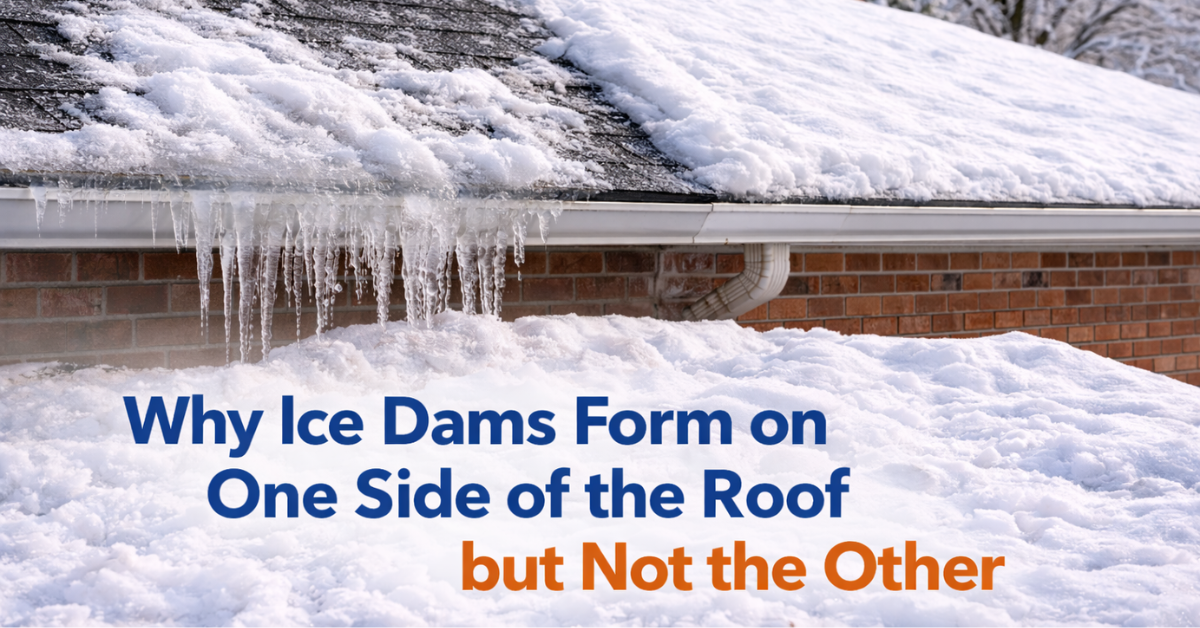
Why Ice Dams Form on One Side of the Roof but Not the Other
You cleared the snow. You even had someone chip away at the ice along your gutters last winter. But this year, the same thing happened again — except only on one side of the roof. The other side looks perfectly fine. No ice buildup. No icicles. No water stains on the ceiling below.
That uneven ice dam pattern is not random. It is one of the most telling signs of what is actually going wrong inside your home. And until you understand why it is happening on just one side, no amount of raking, salting, or gutter cleaning will fix it.
The Basic Science Behind One-Sided Ice Dams
Ice dams form when heat escapes through the roof deck, melts the snow sitting on top, and that meltwater flows down to the eaves where the roof surface is colder. The water refreezes there and creates a ridge of ice that traps more water behind it.
When this only happens on one side of the roof, it means one section of the roof deck is warmer than the other. Something underneath that section is pushing heat upward in a way the opposite side is not. The roof itself might look identical from the outside, but the thermal conditions underneath are completely different.
Common Reasons One Side Gets Ice Dams and the Other Does Not
The most frequent cause is uneven attic insulation. During original construction or a later renovation, one section of the attic may have received less insulation coverage. Blown-in insulation shifts over time, especially in attics with foot traffic, HVAC equipment, or storage. One side might have a full R-49 blanket while the other has compressed batts barely hitting R-19. That thinner side lets more heat escape and melts snow faster.
Ductwork placement is another major contributor. If your HVAC system runs supply or return ducts through the attic, the side of the roof above those ducts will be significantly warmer. Leaky duct connections make this worse. A single poorly sealed boot where a duct meets a register can dump heated air directly into the attic cavity on one side of the home.
Bathroom and kitchen exhaust vents create localized hot spots. If an exhaust fan terminates in the attic instead of venting through the roof or soffit to the outside, warm moist air concentrates in that area. This is more common than most homeowners realize, especially in homes built before the mid-1990s. That warm air melts snow on that section of the roof while the other side stays cold and stable.
Chimney and flue positioning matters too. A chimney that runs up through the interior of the home radiates heat into the attic space on one side. The framing around the chimney chase often has gaps that allow warm air from living spaces to rise into the attic. The side of the roof near the chimney will almost always show more ice dam activity than the opposite side.
Sun exposure plays a role that many homeowners overlook. A south-facing roof slope gets direct winter sunlight for several hours a day. That solar gain melts snow on the sunny side, and if that meltwater flows down to shaded eaves, it refreezes. The north-facing slope stays uniformly cold and may never develop an ice dam at all — or it develops one for entirely different reasons related to heat loss rather than sun exposure.
The Ventilation Factor
Roof ventilation is supposed to keep the entire roof deck at a uniform temperature close to the outside air. When ventilation works correctly, warm air from the attic escapes through the ridge vent while cold outside air enters through the soffit vents, flushing heat away before it can melt snow.
But ventilation is rarely balanced on both sides. Soffit vents on one side might be blocked by insulation that was blown too close to the eaves. A ridge vent might not extend the full length of the peak. Baffles that are supposed to keep the airflow channel open between the insulation and the roof deck might be missing on one side.
In homes with complex roof geometry, one section might have a hip return or a dormer that interrupts the airflow path entirely. That dead zone traps warm air against the roof deck and creates the exact conditions for an ice dam while the adjacent section with unobstructed ventilation stays clear.
What the Pattern Tells a Roofer
An experienced roofer can read one-sided ice dams like a diagnostic map. Ice dams concentrated near the center of the roof suggest a heat source directly below — usually a recessed light, an attic hatch, or a whole-house fan that is not sealed. Ice dams at the corners often point to insulation gaps where walls meet the roof plane. Ice dams on just one slope that lines up with the garage or a room addition indicate different insulation standards between the original structure and the addition.
The shape of the ice dam matters too. A thick uniform ridge means broad heat loss over a large area. Isolated mounds of ice point to specific penetrations or hot spots. Icicles forming from one section of gutter but not the adjacent section tell you exactly where the thermal boundary changes.
Why Fixing Only the Ice Dam Side Is Not Enough
The instinct is to address the side with the problem and leave the other side alone. But one-sided ice dams usually indicate systemic issues. If insulation has shifted or compressed on one side, it is likely thinning on the other side too — just not enough yet to cause visible ice dams. If ductwork is leaking on one side, the overall HVAC efficiency is suffering throughout the home.
Addressing only the visible problem also ignores what happens when conditions change. A winter with heavier snowfall or colder sustained temperatures can push the borderline side into ice dam territory. The goal is not just to fix the bad side but to bring the entire roof system into thermal balance.
The Right Way to Diagnose It
A thermal imaging scan during cold weather will show exactly where heat is escaping through the roof. The temperature differences between the two sides of the roof will be clearly visible. This scan should be done from both outside, looking at the roof surface, and inside, looking at the attic floor and roof deck.
After identifying the heat loss points, the fix usually involves some combination of air sealing, insulation correction, duct sealing, and ventilation balancing. Air sealing alone — closing the gaps around wiring penetrations, plumbing stacks, attic hatches, and recessed lights — often makes the single biggest difference.
What St. Louis Homeowners Should Know
St. Louis winters create ideal conditions for one-sided ice dams. The temperature swings between the teens and the forties mean the freeze-thaw cycle is constant. Older homes in neighborhoods like Bevo Mill, Soulard, Tower Grove, and Carondelet have balloon-frame construction that allows warm air to travel freely from the basement to the attic through wall cavities. Newer homes in Wildwood, Ballwin, and Chesterfield are not immune either, especially when builders used different insulation methods on different sections or when attic HVAC installations were added after original construction.
The combination of brick exteriors, aging insulation, and mixed roofing materials across St. Louis housing stock means one-sided ice dams are one of the most common winter roofing complaints in the area.
Stop Treating the Symptom
If ice dams keep showing up on one side of your roof, the roof is telling you something specific. It is not a roofing problem. It is a building envelope problem that shows up on the roof. The fix starts in the attic, not on the shingles.
Family First Exteriors provides full roof and attic inspections that include thermal diagnostics to identify exactly why ice dams form where they do. If one side of your roof is giving you problems every winter, call (314) 255-8151 to schedule an inspection before the next freeze cycle starts.