
December 24, 2025
What Storm Chasers Get Wrong About Roof Damage
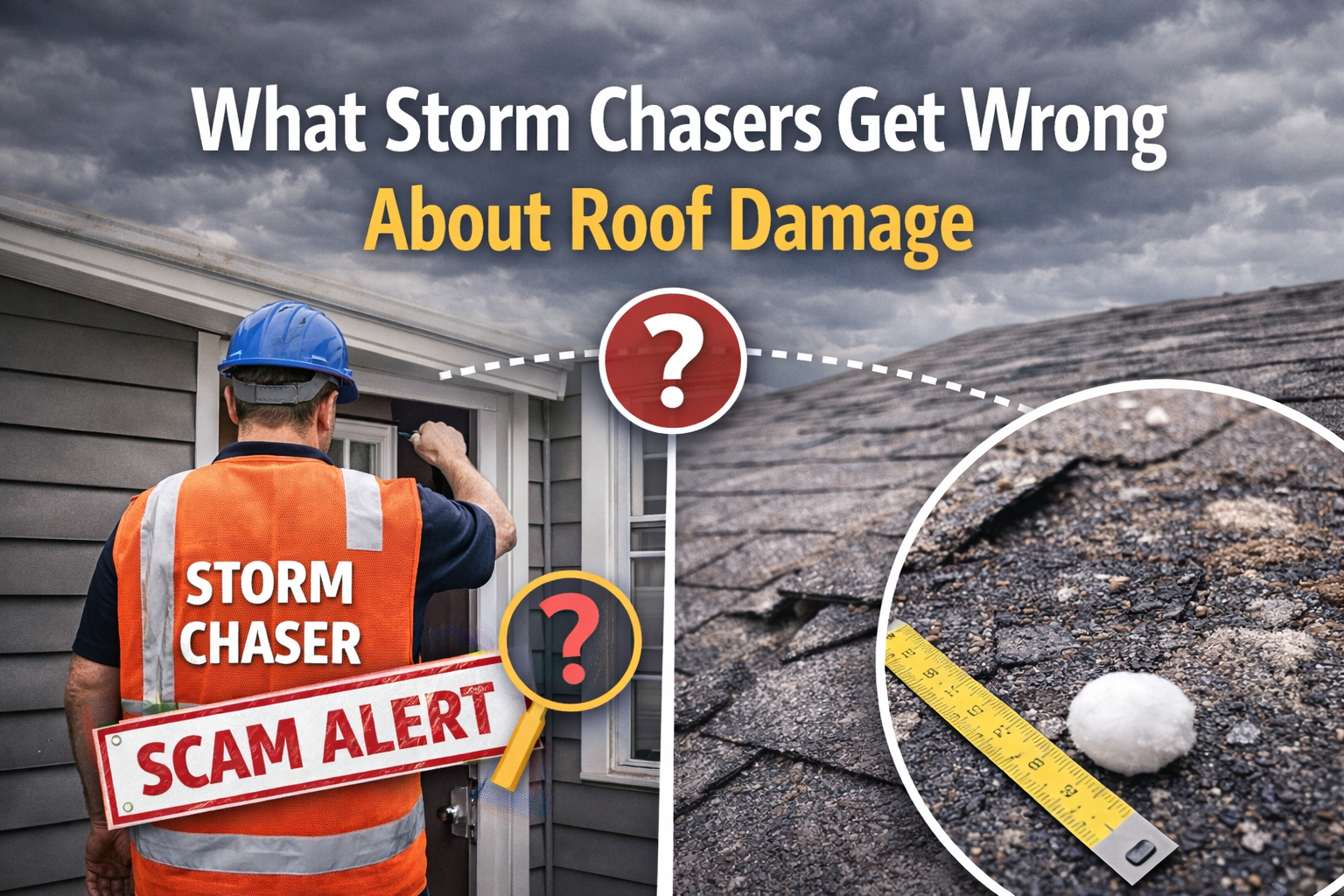
After major storms in the St. Louis area, many homeowners see an influx of door to door roofing crews. These groups often call themselves storm specialists. In reality, many are storm chasers, and they frequently misrepresent roof damage in ways that put homeowners at risk.
Understanding what storm chasers get wrong helps you protect your home, your insurance coverage, and your long-term investment.
Storm Damage Is Not Automatic
One of the most common claims storm chasers make is that every hailstorm equals roof replacement.
That is not how roofing or insurance works.
Storm damage must:
- Be tied to a specific weather event
- Affect the roof’s ability to shed water
- Meet insurer and manufacturer criteria
Many roofs survive storms with no functional damage. Replacing a roof without cause can create problems later.
Cosmetic Marks Are Not the Same as Functional Damage
Storm chasers often point out surface marks and call them damage.
Cosmetic issues may include:
- Minor granule displacement
- Light scuffing
- Small dents that do not affect performance
Insurance carriers focus on functional damage, not appearance. Repairs or replacements based only on cosmetics often fail claim reviews.
Not All Granule Loss Is Storm Related
Granule loss happens for many reasons.
Storm chasers frequently blame storms for:
- Uniform aging
- Manufacturing blistering
- Heat related wear
True hail damage creates impact patterns and fractures, not evenly worn surfaces. Confusing the two misleads homeowners.
Older Roofs Require More Care, Not More Pressure
Many St. Louis homes have aging roofs.
Storm chasers often use roof age as a pressure tactic. They claim older roofs must be replaced after any storm. In reality:
- Older roofs may still be serviceable
- Damage must still be storm related
- Repairs may still be viable
Age alone does not justify replacement.
Filing a Claim Without Evidence Can Backfire
Some storm chasers push homeowners to file claims immediately.
Unnecessary claims can:
- Stay on your insurance record
- Lead to higher premiums
- Result in denials that weaken future claims
A claim should follow confirmation, not speculation.
Quick Inspections Miss Critical Details
Many storm chaser inspections are rushed.
They often miss:
- Flashing damage
- Vent and penetration issues
- Seal integrity problems
- Decking concerns beneath impact zones
A proper inspection takes time and documentation, not a quick walk on the roof.
Out of Town Crews Are Often Gone Before Problems Appear
Storm chasers typically leave once the storm season slows.
If issues arise later:
- Warranties become hard to enforce
- Follow up service may not exist
- Homeowners are left finding help again
Delayed leaks and failures are common after poorly assessed repairs.
Local Knowledge Matters After Midwest Storms
St. Louis weather creates unique challenges.
- Hail and wind often occur together
- Freeze and thaw cycles worsen small damage
- Older housing stock complicates repairs
Contractors unfamiliar with local conditions often overlook these factors.
What a Credible Contractor Does Instead
A legitimate roofing contractor:
- Inspects before recommending action
- Explains what qualifies as storm damage
- Documents findings clearly
- Discusses repair and replacement options honestly
- Lets homeowners decide without pressure
Trust is built through clarity, not urgency.
Protecting Yourself After a Storm
If someone knocks on your door claiming storm damage, slow the process down.
Ask for:
- A documented inspection
- Clear explanations of findings
- Time to review your options
If the answers feel rushed or vague, that is your signal to pause.
The Right Way Forward
Storm damage decisions should be based on facts, not fear.
Family First Exteriors helps St. Louis homeowners evaluate storm damage accurately, without pressure or exaggerated claims, so repairs and replacements are based on real conditions and long-term protection.