
January 9, 2026
What Melting Patterns on Snowy Roofs Reveal About Your Insulation
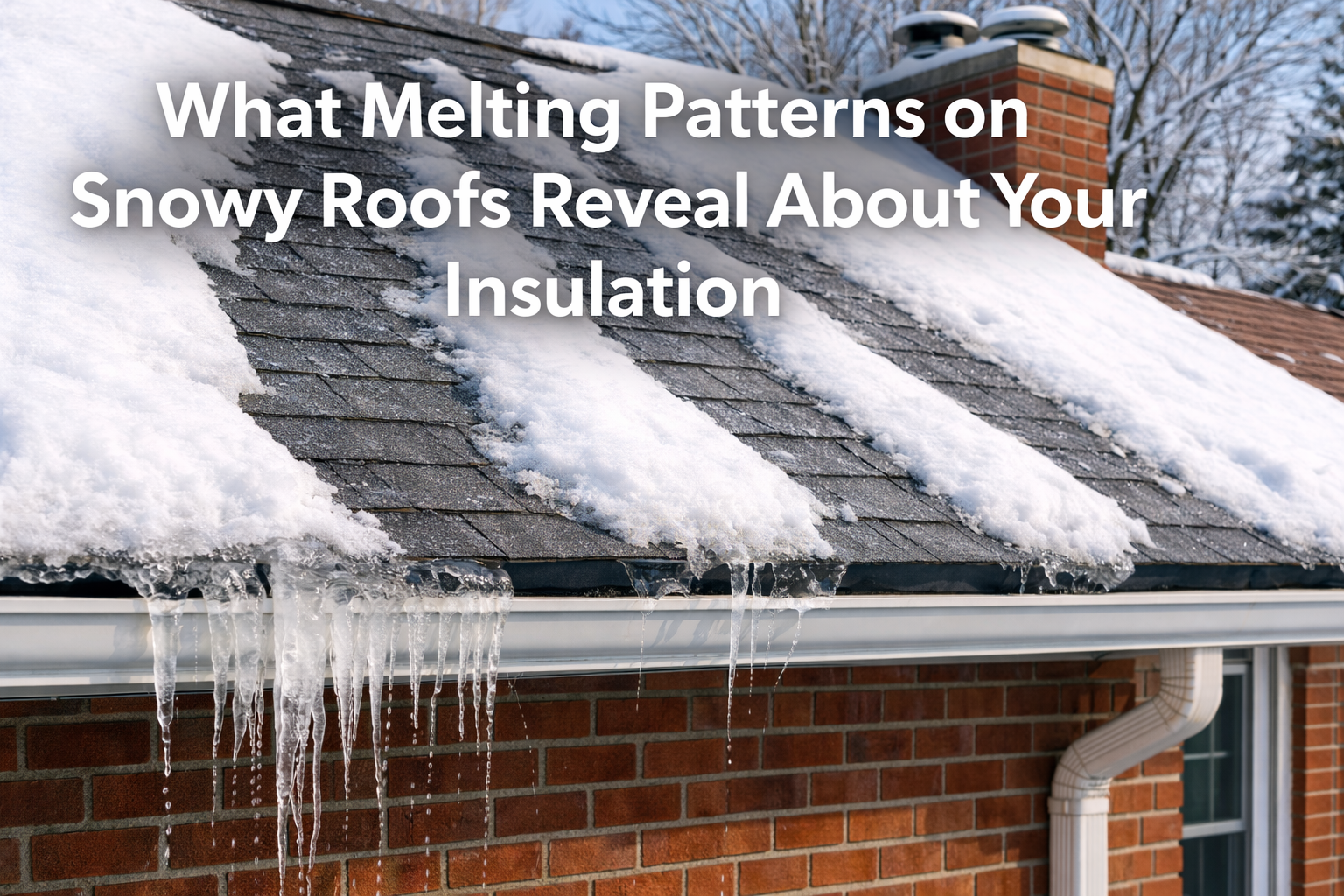
After a snowfall, take a walk down your street. You’ll notice something interesting: no two roofs melt the same way. Some stay evenly snow-covered for days. Others show bare patches, stripes, or rapid runoff even when temperatures remain below freezing.
Those melting patterns are not random. They are visual clues that reveal exactly how heat is moving through your home — and whether your insulation and ventilation are doing their job.
For St. Louis homeowners, especially those in older brick or tight-lot homes, understanding these patterns can help prevent ice dams, leaks, energy loss, and expensive roof damage.
Why snow melt patterns matter
Snow only melts when heat reaches the roof surface. In winter, that heat usually comes from inside your home, not the sun.
When insulation is uneven or ventilation is poor, warm air escapes into the attic, heats sections of the roof deck, and causes snow to melt in specific areas. When that meltwater refreezes at colder roof edges, it creates ice dams and backup leaks.
In short:
Uneven snow melt = uneven heat control inside your home.
Pattern 1: Bare patches near the roof ridge
If snow disappears first near the peak of your roof, it often indicates:
• Heat rising into the attic
• Inadequate attic insulation
• Warm air leaking through ceiling penetrations
This is common in older St. Louis homes where insulation was added inconsistently over the years.
What it means:
Your attic is warmer than it should be, accelerating roof aging and increasing ice-dam risk.
Pattern 2: Melt stripes or “zebra lines”
These appear as alternating snow-covered and snow-free strips across the roof.
Typical causes include:
• Insulation gaps between joists
• Compressed or settled insulation
• Older batts installed unevenly
• Ductwork leaking warm air below certain roof sections
This pattern is extremely common in Clayton, University City, and Kirkwood homes built before modern insulation standards.
What it means:
Your insulation coverage is inconsistent, allowing heat to escape in bands rather than evenly.
Pattern 3: Fast melting near roof edges
When snow melts near the eaves before melting in the middle, it’s often caused by:
• Poor ventilation
• Blocked soffit vents
• Warm attic air trapped at roof edges
This pattern almost always precedes ice dam formation.
What it means:
Cold exterior air isn’t reaching the attic properly, so heat accumulates at the roof perimeter.
Pattern 4: Snow melting around chimneys, dormers, or skylights
These areas create natural heat escape points.
Common contributors include:
• Unsealed chimney chases
• Missing flashing insulation
• Gaps around dormer framing
• Skylight shafts acting like heat funnels
In brick homes, masonry absorbs heat and releases it slowly, further warming nearby roof sections.
What it means:
Localized air leaks are overheating specific roof zones.
Pattern 5: One side of the roof melts much faster than the other
If one slope clears snow rapidly while the other stays frozen, the cause is often:
• Sun exposure combined with heat loss
• Uneven attic airflow
• Different insulation thicknesses between roof sections
This creates temperature imbalances that stress shingles and decking over time.
What it means:
Your attic temperature is not balanced across the roof structure.
Pattern 6: Snow melts quickly, then refreezes into heavy ice
This is the most dangerous pattern.
It means:
• Heat is escaping rapidly
• Snow is melting continuously
• Meltwater refreezes at gutters or eaves
This cycle causes ice dams, gutter damage, fascia rot, and interior leaks.
What it means:
Your roof is losing energy fast — and water is backing up where it shouldn’t.
Why St. Louis homes are especially vulnerable
St. Louis winters create ideal conditions for insulation problems to reveal themselves:
• Frequent freeze-thaw cycles
• Humid interior air
• Brick construction that retains heat
• Older attic designs
• Tight-lot city layouts with limited ventilation
Homes in neighborhoods like Benton Park, The Hill, Carondelet, Clayton, and University City often show snow melt problems earlier and more aggressively than newer suburban builds.
What these patterns don’t mean
Many homeowners assume snow melt means:
• “The roof is bad”
• “The shingles are failing”
• “I need a new roof right now”
In reality, the roof surface is often fine. The problem lies underneath — in insulation, air sealing, and ventilation.
Fixing those issues can extend roof life by years.
How professionals diagnose the real problem
A proper winter inspection looks at more than just shingles. It includes:
• Attic temperature checks
• Insulation depth measurement
• Air-leak detection
• Ventilation balance assessment
• Thermal imaging (when conditions allow)
• Examination of ice-dam-prone zones
This approach identifies the source of heat loss, not just the symptom.
What homeowners should do when they notice uneven melting
- Take photos after snowfalls to track recurring patterns
- Check for icicles or ice buildup along gutters
- Inspect ceilings for moisture stains or bubbling paint
- Avoid temporary fixes like salt socks or roof raking without understanding the cause
- Schedule a professional inspection focused on insulation and airflow
Early action prevents major damage later.
The bottom line
Your roof tells a story every winter. Snow melt patterns are one of the clearest, most visible signals that something is happening inside your home — long before leaks appear.
If snow melts unevenly on your roof, your insulation and ventilation are sending warning signs.
Understanding those signals — and acting on them — can save thousands in repairs, reduce energy bills, and dramatically extend the life of your roof.
Family First Exteriors specializes in identifying these hidden winter issues across St. Louis homes. If your roof melts in strange patterns, it’s worth finding out why.