
March 30, 2026
St. Louis Hail Season Is Coming: How to Prepare Your Roof and File a Storm Damage Claim
Every spring, St. Louis homeowners start hearing the same phrase on local weather broadcasts: severe thunderstorm warning with large hail possible. It’s part of life in the region. The greater St. Louis metro sits squarely in the central U.S. severe weather corridor, and the stretch from late March through early July is prime time for the kind of storms that can leave golf ball-sized dents across an entire neighborhood in a matter of minutes.
Hail damage to a roof isn’t always dramatic. You won’t necessarily see missing shingles or gaping holes. In many cases, hail impact creates subtle damage—bruised shingles, cracked granule surfaces, dented flashing—that’s invisible from the ground but compromises the long-term integrity of your roofing system. Left unaddressed, that damage accelerates wear, shortens the roof’s lifespan, and can void manufacturer warranties.
This guide covers two things every St. Louis homeowner should understand before the next storm rolls through: how to prepare your home to minimize damage, and how to navigate the insurance claims process if damage does occur.
What Hail Actually Does to Your Roof
Hailstones vary in size from pea-sized pellets to softball-sized chunks of ice, and the damage they cause depends on their size, density, wind speed, and the angle of impact. Even relatively small hail—around one inch in diameter—can cause meaningful damage to asphalt shingles when driven by strong winds.
On asphalt shingle roofs, which cover the vast majority of homes in the St. Louis area, hail damage typically shows up in several ways:
- Granule displacement: Hail impact knocks loose the protective granules that coat the surface of asphalt shingles. These granules shield the underlying asphalt from UV radiation. Once they’re gone, the exposed asphalt deteriorates rapidly—sometimes within a single season of St. Louis summer sun.
- Bruising: A hailstone can dent the shingle without breaking through the surface, creating a soft spot where the underlying mat has been compromised. These bruises weaken the shingle’s ability to shed water and resist future wind uplift.
- Cracking: Larger hailstones can crack shingles outright, creating immediate pathways for water infiltration. Cracks may not be visible from the ground but are easily identified during a professional roof inspection.
- Flashing and vent damage: Metal flashing, pipe boots, ridge caps, and roof vents are all susceptible to dents and deformation from hail impact. Even cosmetic dents can break the seal around these penetration points and create slow leaks.
Hail damage also extends beyond the roof. Gutters, downspouts, siding, soffit, fascia, and window screens can all sustain impact damage during a significant hail event. When filing an insurance claim, it’s important to have the entire exterior evaluated—not just the roof.
How to Prepare Your Home Before Hail Season
You can’t prevent a hailstorm, but you can take steps to minimize the damage and put yourself in a stronger position if you need to file an insurance claim.
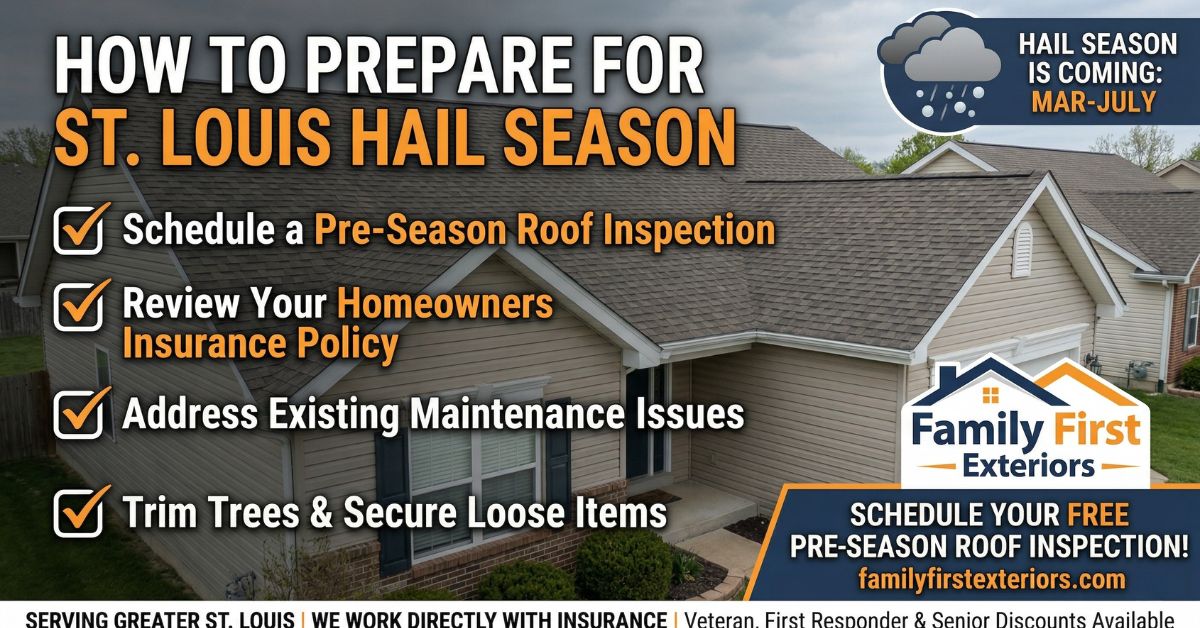
Schedule a Pre-Season Roof Inspection
The single most valuable thing you can do before hail season is have a professional inspect your roof and document its current condition. This creates a baseline record—photographs and a written assessment of the roof’s condition before any storm damage occurs. If you do file a claim later, having documented proof of your roof’s pre-storm condition makes the claims process significantly smoother and reduces the chance of disputes with your insurance adjuster.
Family First Exteriors provides thorough pre-season inspections for homeowners across the greater St. Louis area. We document everything with photos and can provide a written report you can keep on file with your insurance paperwork.
Review Your Homeowners Insurance Policy
Before storm season hits, pull out your policy and familiarize yourself with a few key details: Does your policy cover storm damage at replacement cost or actual cash value? What is your deductible for wind and hail claims? Is there a separate hail deductible (some Missouri policies have one)? What is the time limit for filing a claim after a storm event?
Understanding these details in advance saves confusion and stress when you’re dealing with the aftermath of an actual storm. If anything in your policy is unclear, call your insurance agent and ask—it’s far better to get answers now than in the middle of a claim.
Address Existing Maintenance Issues
Insurance covers storm damage, not pre-existing wear and tear. If your roof already has issues—cracked shingles from age, deteriorating flashing, clogged gutters—those problems can complicate a claim because the adjuster may attribute some of the damage to deferred maintenance rather than the storm. Getting your roof, gutters, and exterior in good working order before storm season strengthens your position if you need to file a claim later.
Trim Trees and Secure Loose Items
Overhanging branches can break off during severe storms and cause impact damage to your roof, gutters, and siding that goes beyond what hail alone would produce. Trim branches back to at least six feet from the roofline. Also walk around your property and secure or store anything that could become a projectile in high winds—patio furniture, decorative items, unsecured trash cans, and children’s outdoor toys.
What to Do After a Hailstorm
The hours and days immediately following a major hail event are critical. Here’s a step-by-step approach:
Step 1: Document Everything from the Ground
As soon as it’s safe to go outside, walk around your property and take photos and video of any visible damage. Focus on dented gutters, damaged siding, cracked window screens, and any debris that came off the roof. If you can see shingle damage from the ground, photograph it, but do not get on the roof yourself—it’s dangerous, and you could inadvertently cause additional damage that complicates your claim.
Also photograph the hailstones themselves if possible, placed next to a coin or ruler for scale. This documents the approximate size of the hail, which is relevant to the claim.
Step 2: Call Your Insurance Company
Contact your homeowners insurance provider as soon as possible to report the damage and initiate a claim. Most Missouri policies have time limits for filing—often one year from the date of the storm, though some are shorter. Don’t wait. Even if the damage seems minor, getting the claim on record protects your rights.
When you call, they’ll assign a claim number and schedule an adjuster visit. Write down the claim number, the name of the adjuster, and any reference numbers you’re given.
Step 3: Schedule a Professional Roof Inspection
Before the insurance adjuster visits, have a reputable local roofing contractor inspect the roof and provide their own damage assessment. This is important because insurance adjusters are generalists—they evaluate many types of claims—while an experienced roofer understands the specific ways hail affects roofing materials and can identify damage that a generalist might miss.
Family First Exteriors has extensive experience working with insurance companies on storm damage claims throughout the St. Louis metro area. We can inspect your roof, document the hail damage with detailed photos, and provide a written estimate that your insurance company can use in processing the claim.
Step 4: Be Present for the Adjuster’s Visit
When the insurance adjuster comes to inspect your property, be there. Walk the property with them, point out damage you’ve documented, and ask questions about anything that’s unclear in their assessment. If possible, have your roofing contractor present as well—Family First Exteriors routinely meets with adjusters on behalf of our customers to make sure all damage is properly identified and included in the scope of work.
Step 5: Review the Scope and Get Repairs Done
Once the insurance company approves the claim, review the scope of work carefully. Make sure it covers everything that was damaged, including any items beyond the roof itself—gutters, siding, soffit, fascia, window screens, and other exterior components. If you believe the scope is incomplete, you have the right to request a re-inspection or supplement the claim with additional documentation from your contractor.
Choose a licensed, insured, local contractor to perform the repairs. Be cautious of storm chasers—out-of-town contractors who flood into an area after major storms, offer aggressive deals, and may not be around if warranty issues arise later. Family First Exteriors is a locally owned company that’s been serving the St. Louis area for over 19 years. We’ll be here long after the repairs are complete.
Common Mistakes St. Louis Homeowners Make with Storm Damage Claims
The insurance claims process can be confusing, and well-meaning homeowners sometimes make mistakes that weaken their claim or leave money on the table. Here are the most common pitfalls to avoid:
- Waiting too long to file. Missouri has statutes of limitations on insurance claims, and many policies have their own shorter deadlines. File promptly after the storm, even if you’re not sure about the extent of the damage.
- Making permanent repairs before the adjuster visits. Temporary measures to prevent further damage (like tarping a leak) are fine and expected. But don’t replace shingles or complete permanent repairs before the adjuster has had a chance to see and document the original damage.
- Not documenting pre-storm condition. This is why pre-season inspections are so valuable. Without a baseline, it can be harder to prove that specific damage was caused by the storm rather than pre-existing wear.
- Accepting the first estimate without question. Insurance adjusters are human and can miss things. If the initial damage assessment seems low or incomplete, request a supplement or a re-inspection. Your contractor’s documentation can support this process.
- Signing contracts with storm chasers. Be wary of door-to-door contractors who appear immediately after a storm, especially those who offer to “cover your deductible” or pressure you into signing before your insurance claim is even processed. This is often a red flag for substandard work or inflated billing practices.
Don’t Forget the Rest of Your Exterior
A major hail event doesn’t just affect your roof. Aluminum gutters and downspouts show hail dents readily, and those dents can disrupt water flow and weaken seams. Vinyl and aluminum siding can crack, dent, or shatter from hail impact. Soffit panels can be perforated. Window screens get torn. Even wood fascia can show impact marks.
All of this exterior damage is typically covered under the same storm damage claim. Because Family First Exteriors is a full-service residential exterior company—handling roofing, gutters, siding, soffit and fascia, gutter protection, and replacement windows—we can evaluate and repair your entire exterior under a single scope of work. That simplifies the process for you and ensures nothing gets overlooked.
Be Ready Before the Storm, Not After
Hail season in St. Louis isn’t a question of if but when. The homeowners who come through it best are the ones who prepare in advance—who know the condition of their roof before the storm hits, who understand their insurance policy, and who have a trusted local contractor they can call when they need help.
Family First Exteriors has been helping St. Louis families protect their homes and navigate storm damage claims for over 19 years. Whether you need a pre-season inspection, a post-storm damage assessment, help working with your insurance company, or full exterior repairs, we’re here to help—with honesty, transparency, and the quality craftsmanship your home deserves.
Schedule Your Free Pre-Season Roof Inspection
Contact Family First Exteriors today at familyfirstexteriors.com/contact-us
Storm damage? We work directly with your insurance company.
20% discount for veterans, first responders & seniors | Financing available
Serving Creve Coeur, Des Peres, Wildwood, Ellisville, Kirkwood, Webster Groves, Ballwin, Maplewood, Chesterfield, and the entire greater St. Louis metro area.