
December 19, 2025
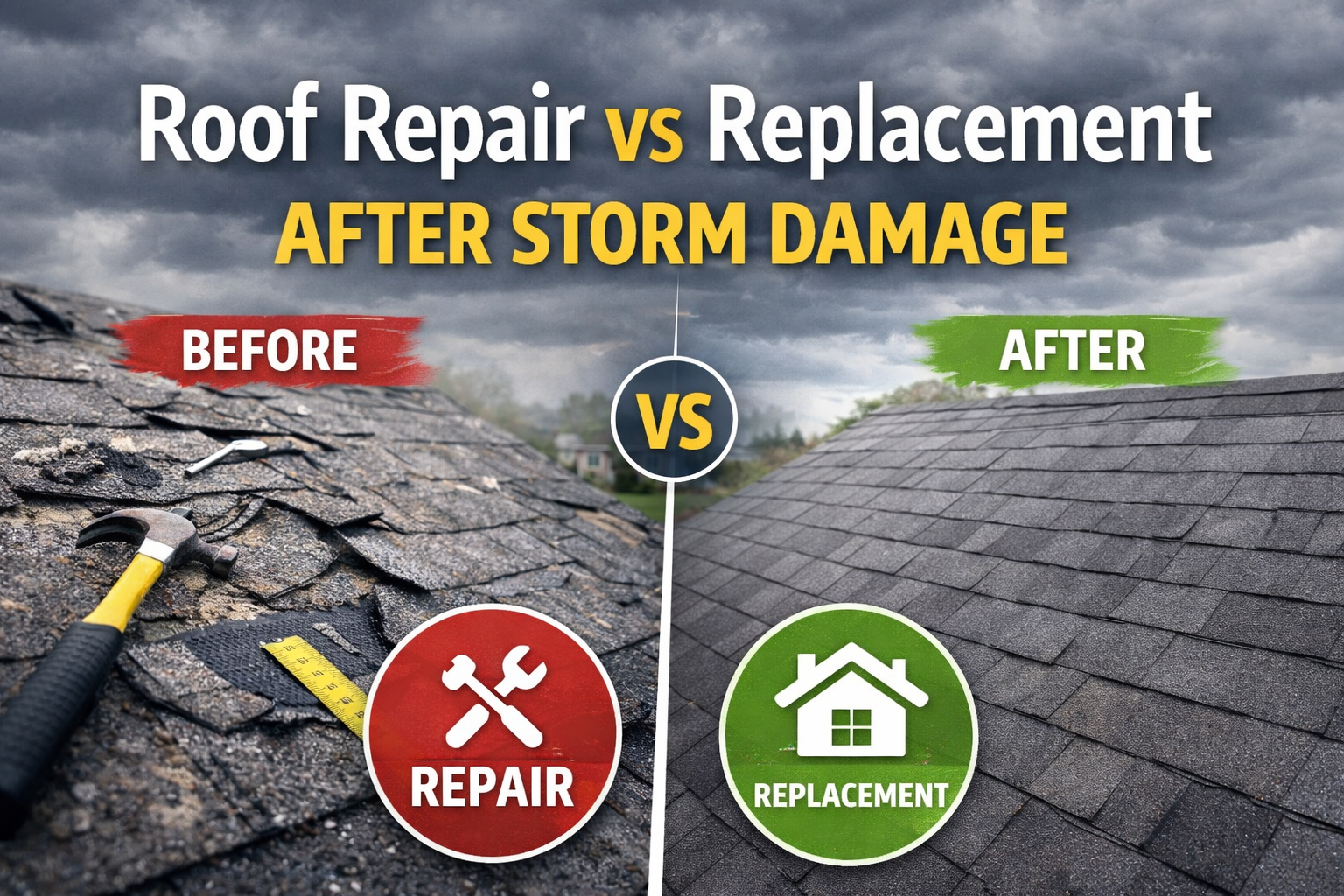
Roof Repair vs Replacement After Storm Damage
After a major storm, St. Louis homeowners often hear conflicting advice. One contractor recommends a quick repair. Another says the roof needs full replacement. The right answer depends on damage type, roof condition, and long-term performance, not pressure or promises.
Here is how to tell which option actually makes sense after storm damage.
Start With the Type of Damage
Not all storm damage affects a roof the same way.
Repairable damage often includes:
- A small number of lifted or missing shingles
- Isolated flashing damage
- Minor wind-related issues without shingle fractures
- Limited debris impact
These issues can often be corrected without disturbing the entire roofing system.
Replacement-level damage often includes:
- Widespread hail bruising across multiple slopes
- Fractured shingles with exposed asphalt mat
- Wind damage that broke shingle seals across large areas
- Damage that affects the roof’s ability to shed water properly
When the integrity of the system is compromised, spot repairs rarely hold long term.
How Roof Age Changes the Decision
Age plays a major role in repair viability.
On newer roofs:
- Matching materials is easier
- Shingles still flex and reseal properly
- Repairs blend better and last longer
On older roofs:
- Shingles become brittle
- Repairs can cause additional breakage
- Matching shingles is difficult or impossible
In St. Louis, many homes have roofs approaching the end of their service life, which limits repair effectiveness after storms.
Why Hail Damage Is Different From Wind Damage
Hail damage weakens shingles internally.
Even when shingles stay in place, impact fractures can:
- Allow water to penetrate over time
- Shorten shingle lifespan
- Fail during future storms
Wind damage often looks minor but can break factory seals. Once seals fail, shingles lift more easily during the next weather event.
Both scenarios can justify replacement when damage is widespread.
Code and Manufacturer Requirements Matter
Roofing decisions are not based on appearance alone.
Factors that influence replacement include:
- Manufacturer installation requirements
- Local building codes
- Inability to match existing shingles
- Required upgrades when large sections are disturbed
In some cases, repairs are no longer code-compliant once damage crosses a certain threshold.
Insurance Considerations Homeowners Should Understand
Insurance carriers evaluate whether repairs can restore the roof to its pre-storm condition.
Key considerations include:
- Percentage of damaged shingles
- Damage across multiple slopes
- Matching availability
- Functional impact, not cosmetic appearance
A repair that leaves mismatched or weakened areas may not meet insurance standards.
The Long-Term Cost Factor
Repairs often cost less upfront but can carry hidden risks.
Short-term repairs may:
- Fail under future storms
- Lead to repeated service calls
- Create leak paths months later
Replacement costs more initially but:
- Restores full system integrity
- Resets roof lifespan
- Reduces long-term maintenance risk
The right choice balances cost today with protection tomorrow.
Why Professional Inspections Matter
Homeowners cannot see all storm damage from the ground.
A proper inspection evaluates:
- Shingle fractures and bruising
- Seal integrity and wind lift
- Flashing, vents, and penetration points
- Decking impact beneath damaged areas
In the St. Louis climate, freeze and thaw cycles can turn minor damage into major failures quickly.
Avoid Pressure-Based Decisions
Be cautious of any recommendation made without a thorough inspection.
A legitimate contractor will:
- Explain why repair or replacement is recommended
- Show documented findings
- Answer questions clearly
- Let you make the final decision
There is no one-size-fits-all answer after storm damage.
Making the Right Call
Roof repair and roof replacement both have valid roles after a storm. The right choice depends on damage extent, roof age, and system performance, not urgency or sales tactics.
Family First Exteriors helps St. Louis homeowners understand their options with clear inspections and honest guidance, so repairs or replacements are based on facts, not assumptions.