
December 19, 2025
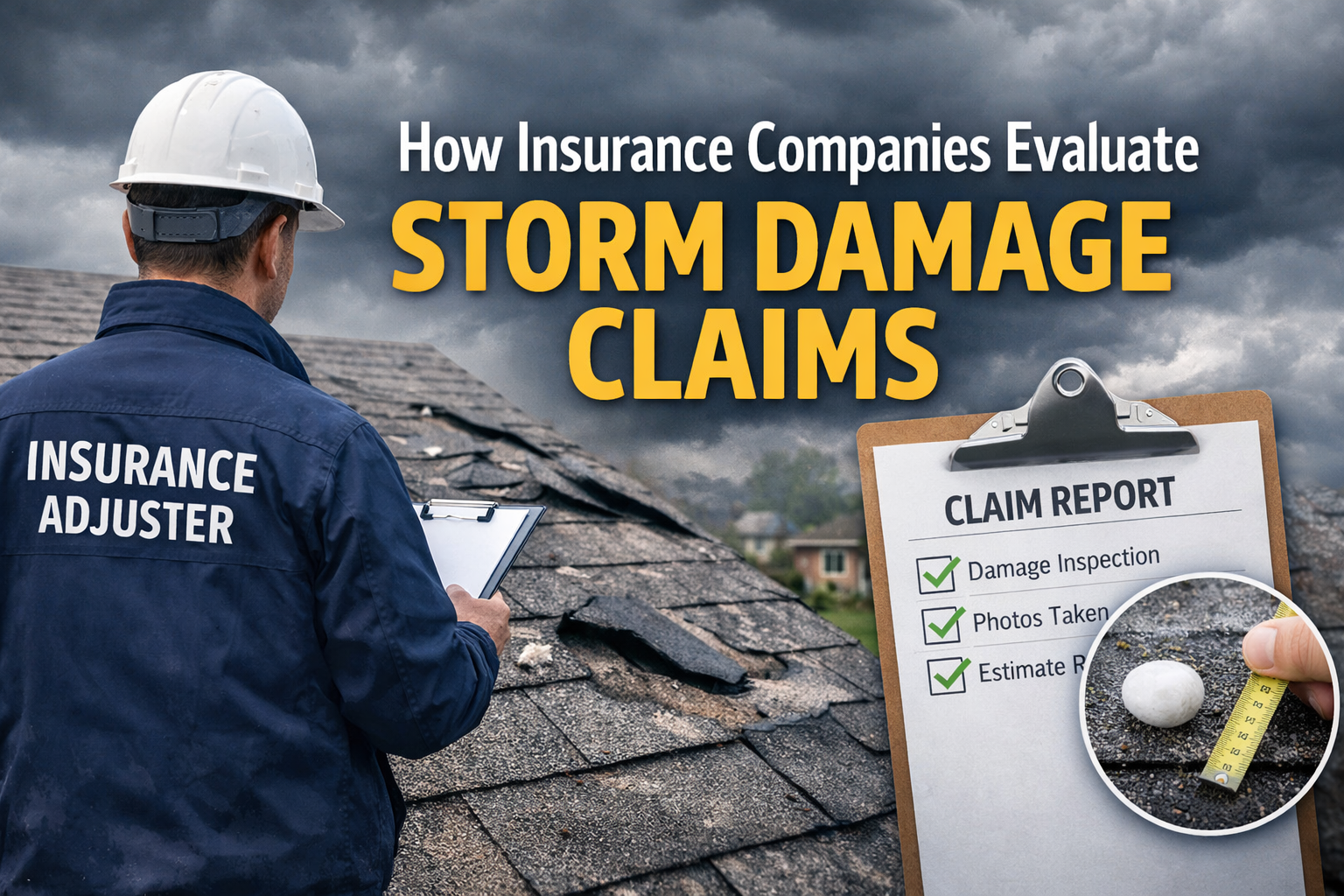
How Insurance Companies Evaluate Storm Damage Claims
Many St. Louis homeowners feel unsure once an insurance claim enters the process. The confusion usually comes from not knowing how insurance companies actually evaluate storm damage. Understanding the criteria helps you set realistic expectations and avoid costly mistakes.
Here is how insurers typically review storm damage claims, step by step.
Storm Damage Must Be Linked to a Specific Event
Insurance coverage depends on timing.
Carriers look for:
- A documented hail or wind event
- A clear date of loss
- Physical damage consistent with that event
General wear, aging, and maintenance issues are not covered. Damage must be sudden and tied to a known storm.
Adjusters Focus on Functional Damage
Insurance decisions are not based on appearance alone.
Adjusters evaluate whether the storm:
- Compromised the roof’s ability to shed water
- Weakened shingles, flashing, or vents
- Created openings that can lead to leaks
Cosmetic marks without functional impact often receive different treatment than damage that affects performance.
What Adjusters Look for on the Roof
During an inspection, adjusters typically check:
- Hail bruising and fractured shingles
- Wind-lifted or creased shingles
- Damage across multiple roof slopes
- Exposed asphalt mat or broken seals
- Soft metal damage to vents, flashing, and gutters
Consistent damage patterns matter more than isolated marks.
The Importance of Multiple Slopes
Damage confined to one area may limit coverage.
When adjusters see damage:
- On several slopes
- On both soft metals and shingles
- Across different exposures
It strengthens the case that the storm caused widespread impact rather than isolated wear.
Matching and Repair Limitations
Insurance carriers consider whether repairs can reasonably restore the roof.
Key factors include:
- Availability of matching shingles
- Brittleness of existing materials
- Manufacturer requirements
- Local building codes
If repairs cannot restore uniform function or appearance, replacement may be justified.
ACV vs RCV Explained Simply
Most homeowner policies fall into two categories.
Actual Cash Value policies:
- Factor in depreciation
- Pay less on older roofs
- Often result in higher out-of-pocket costs
Replacement Cost Value policies:
- Cover full replacement cost
- Still apply deductibles
- Pay remaining funds after work is completed
Knowing which policy you have affects expectations from the start.
Documentation Carries Weight
Insurance decisions rely heavily on documentation.
Strong claims include:
- Clear photos of damage
- Inspection reports
- Storm dates and weather data
- Consistent findings between inspections
Poor documentation often leads to delays or denials.
Common Reasons Claims Are Denied or Limited
Claims are often denied or reduced due to:
- Damage attributed to normal wear
- Missed filing deadlines
- Inconsistent damage patterns
- Lack of supporting documentation
Understanding these reasons helps homeowners avoid preventable issues.
Why Timing Matters After a Storm
Delays can weaken a claim.
Over time:
- Damage becomes harder to attribute to one event
- Subsequent weather complicates evaluations
- Insurance carriers raise questions about maintenance
Early inspections protect the integrity of the claim.
The Role of a Professional Inspection
A professional inspection helps establish facts before assumptions.
It provides:
- Clear identification of storm-related damage
- Photo documentation aligned with adjuster criteria
- A realistic assessment of repair versus replacement
This information helps homeowners decide whether filing a claim makes sense.
What Homeowners Should Remember
Insurance companies follow defined evaluation standards. They do not assume every storm caused damage, and they do not rely on guesswork.
Understanding how claims are evaluated helps homeowners approach the process with clarity instead of stress.
Family First Exteriors works with St. Louis homeowners to document storm damage accurately and explain inspection findings clearly, so insurance decisions are based on real conditions, not confusion.