
July 8, 2026
Attic Ventilation Problems: The Hidden Cause of Roof Failure in St. Louis
Improper attic ventilation is the number one reason roofing manufacturers deny warranty claims, according to RoofVista’s 2026 industry analysis. It is also the most common hidden cause of premature roof failure in St. Louis homes, particularly those built before 2000 when ventilation standards were less stringent. When your attic cannot breathe, summer temperatures against the underside of the roof deck reach 150 to 170 degrees Fahrenheit, baking shingles from below and cutting their lifespan by up to 25%. In winter, trapped warm air creates ice dams and condensation that rots decking and grows mold. A ventilation upgrade during a roof replacement costs $400 to $1,200. Skipping it can lead to $5,000 to $20,000 in premature roof failure, voided warranties, and mold remediation.
How Does Attic Ventilation Work?
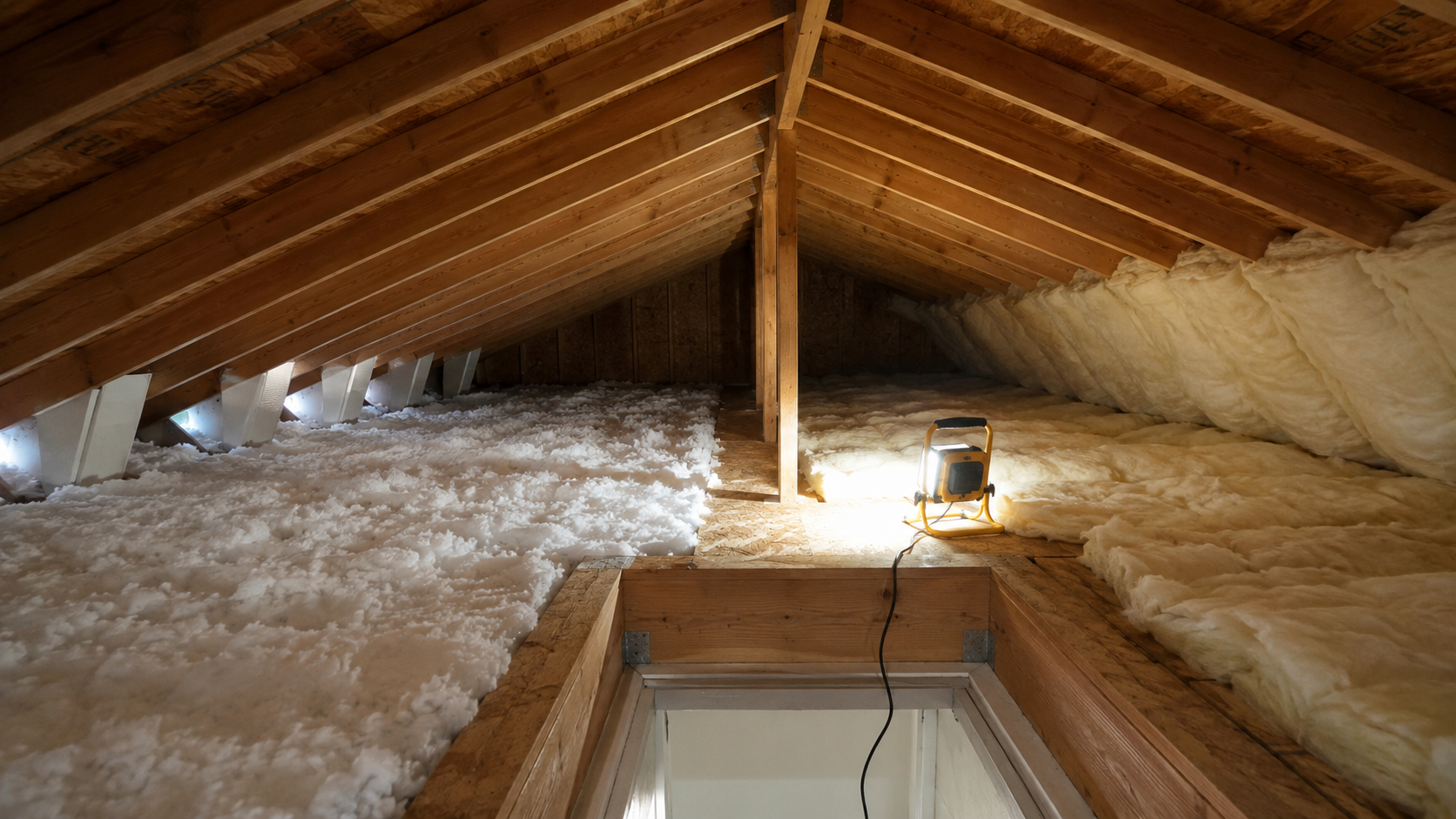
A healthy attic ventilation system creates a continuous loop: cool outside air enters through intake vents at the lowest point of the roof (typically soffit vents under the eaves), flows upward along the underside of the roof deck, and exits through exhaust vents near the peak (typically a continuous ridge vent). This moving air does two things: it removes excess heat in summer (protecting shingles from thermal degradation) and removes moisture in winter (preventing condensation, mold, and ice dams).
The International Residential Code (IRC R806.1) requires cross ventilation in all enclosed attics. IRC R806.2 sets the minimum ratio at 1 square foot of net free ventilating area per 150 square feet of attic floor space (1:150). With a balanced intake-to-exhaust ratio (approximately 60% intake, 40% exhaust), the ratio can be reduced to 1:300.
The formula is straightforward: divide your attic square footage by 150 to get the total net free ventilating area (NFVA) required. A 2,000 square foot attic needs approximately 13.3 square feet of total ventilation, split 60/40 between intake and exhaust.
What Goes Wrong with Attic Ventilation in St. Louis Homes?
St. Louis homes face ventilation failures for several reasons specific to the region’s housing stock and climate:
Blocked soffit vents. This is the most common problem. Blown-in insulation pushed too far into the eaves covers soffit vents and cuts off intake airflow. In older Kirkwood, Webster Groves, and Ballwin homes where insulation has been added over the years, soffit blockage is extremely common. Without intake air, the ridge vent cannot create the convective loop needed to move air through the attic.
Mixed exhaust types. Combining a ridge vent with a powered attic fan or box vents on the same roof short-circuits the airflow system. The powered fan or box vent creates negative pressure that pulls air in through the ridge vent (which should be exhaust only), bypassing the soffit-to-ridge airflow path entirely. Most manufacturer warranties explicitly prohibit mixing exhaust types.
Painted-over or sealed soffit vents. During siding or soffit and fascia replacement, soffit vents sometimes get painted over, caulked shut, or covered by new panels that lack perforations. The vents look intact from the ground, but zero air is getting through.
Bathroom fans venting into the attic. Kitchen and bathroom exhaust fans should vent to the exterior, never into the attic space. In many older St. Louis homes, these fans terminate in the attic, dumping warm moist air directly into the space where it condenses on cold surfaces all winter. This is one of the fastest paths to mold growth on the roof deck.
What Damage Does Poor Ventilation Cause?
The consequences are different in summer and winter, but they compound year-round:
| Season | What Happens | Cost of Damage |
|---|---|---|
| Summer | Attic temps reach 150-170°F. Shingles bake from below, accelerating granule loss, curling, and seal strip failure. 30-year shingles can show 10-year wear. | Premature roof replacement: $8,500-$15,000 |
| Summer | HVAC works overtime to compensate for radiant heat from the attic. Cooling costs increase 10-20%. | $200-$600/year in wasted energy |
| Winter | Warm attic air melts snow from below. Meltwater refreezes at cold eaves, forming ice dams that push water under shingles. | Ice dam repair: $500-$1,500 per event |
| Winter | Moisture condenses on cold roof deck, saturating insulation and creating conditions for mold growth. | Mold remediation: $1,500-$4,500 |
| Year-round | Persistent moisture rots roof sheathing and rafters. | Structural deck/rafter repair: $3,000-$8,000 |
The cumulative financial impact of neglected ventilation can exceed $20,000 when you add premature roof replacement, structural repairs, mold remediation, voided warranties, and years of wasted energy. A $400 to $1,200 ventilation upgrade during a roof replacement prevents all of it.
How Do I Know If My Attic Ventilation Is Failing?
You do not need to crawl into the attic to notice the early signs. Many are visible from inside your home or from the ground:
Upper-floor rooms are noticeably hotter than the rest of the house in summer. If the second floor is consistently 5 to 10 degrees warmer than the first floor despite your HVAC running, trapped attic heat is radiating through the ceiling.
Ice ridges forming along the roof edge in winter. Icicles hanging from the eaves look picturesque, but they usually indicate that the attic is too warm, melting snow that refreezes at the cold eaves.
Shingles curling or aging prematurely. If your architectural shingles are showing visible curl before year 15, thermal damage from below is a likely contributor.
Musty smell in the attic. Mold does not need a dramatic leak. It needs moisture, darkness, and time. A poorly ventilated attic provides all three.
Frost on the underside of the roof deck in winter. If you see white frost on the plywood when you look up into the attic on a cold morning, moisture is condensing because the air is not moving out.
Rusted nail tips, flashing clips, or metal straps in the attic. Oxidation on metal in the attic is a clear indicator of chronic moisture exposure.
When Is the Best Time to Fix Ventilation?
During a roof replacement. This is by far the most cost-effective window because the roof is already open. The crew can see the decking, underlayment, ridge details, and every penetration. Installing continuous ridge vent, adding or upgrading soffit vents, inserting rafter baffles (per IRC R806.3) to keep insulation from blocking airflow, and removing conflicting exhaust types (powered fans or box vents) are all straightforward additions to a re-roof scope.
When Family First Exteriors replaces a roof, we calculate the required NFVA per IRC R806.2, measure existing ventilation capacity, and design a balanced system before the project starts. We document the ventilation upgrades for the shingle manufacturer warranty registration, because proper ventilation is a warranty requirement, not an optional add-on.
If a roof replacement is not in the near future, ventilation upgrades can often be done independently. Adding continuous soffit vents, unblocking existing soffit intake, and installing rafter baffles are all projects that improve attic performance without replacing the roof.
About Family First Exteriors
Family First Exteriors, LLC evaluates attic ventilation as part of every roof replacement project across the greater St. Louis area. The company also handles storm damage and insurance claims, siding, soffit, and fascia, gutter systems, and replacement windows. In business since 2002. A 20% discount is available to veterans, first responders, and senior citizens. Financing available.
15009 Manchester Rd, Ste 261,
Ballwin,
MO
63011
Phone: (314) 255-8151
Request a Free Estimate
Frequently Asked Questions
Can poor attic ventilation void my roof warranty?
Yes. Improper attic ventilation is the number one reason manufacturer warranty claims are denied. Shingle manufacturers require balanced intake and exhaust ventilation meeting specific ratios as a condition of their warranty. If your attic does not meet these requirements, the manufacturer can deny a claim on the grounds that the environment, not the product, caused the failure.
How much does a ventilation upgrade cost during a roof replacement?
A complete ventilation system upgrade during a roof replacement costs $400 to $1,200, including continuous ridge vent ($300 to $900), soffit vent upgrades, and rafter baffles. This is far less than the cost of premature roof failure ($8,500 to $15,000), mold remediation ($1,500 to $4,500), or structural repairs ($3,000 to $8,000) caused by ventilation neglect.
What are the signs of poor attic ventilation?
Common signs include upper-floor rooms that are significantly hotter than the rest of the house in summer, ice dams forming along the roof edge in winter, shingles curling prematurely, musty odors in the attic, frost on the underside of the roof deck during cold weather, and rising energy bills without an obvious cause. Many homeowners misdiagnose these as HVAC or insulation problems.
Can I mix a ridge vent with a powered attic fan?
No. Combining a ridge vent with a powered attic fan or box vents on the same roof short-circuits the airflow system and voids most manufacturer warranties. The powered fan creates negative pressure that pulls air in through the ridge vent instead of allowing the natural soffit-to-ridge convective loop to function. Use one exhaust type only.
How much attic ventilation does my St. Louis home need?
Per IRC R806.2, divide your attic square footage by 150 to get the total net free ventilating area (NFVA) required. A 2,000 square foot attic needs approximately 13.3 square feet of total ventilation, split approximately 60% intake (soffit vents) and 40% exhaust (ridge vent). A qualified roofer calculates this as part of any roof replacement project.
Do bathroom fans venting into the attic cause roof problems?
Yes. Bathroom and kitchen exhaust fans should vent to the exterior, never into the attic space. In many older St. Louis homes, these fans terminate in the attic, dumping warm moist air that condenses on cold roof surfaces in winter. This is one of the fastest paths to mold growth on the roof deck and premature deterioration of sheathing and insulation.
Concerned About Your Attic Ventilation?
Family First Exteriors evaluates ventilation as part of every roof inspection and replacement project. Free estimates throughout the St. Louis metro.
(314) 255-8151 | Request Your Free Inspection Online
Serving Ballwin, Kirkwood, Webster Groves, Creve Coeur, Chesterfield, Wildwood, Des Peres, Ellisville, Maplewood, and the entire St. Louis metro. 20% discount for veterans, first responders, and seniors.