
January 15, 2026
Attic Heat Loss: The Hidden Utility Bill You Pay Every Winter
Most homeowners think their winter energy bills are driven by the furnace, the thermostat setting, or rising utility costs. What they don’t realize is that a significant portion of that money is quietly escaping through one place — the attic.
Attic heat loss acts like a second, invisible utility bill. You don’t see it itemized, but you pay for it every month. In St. Louis winters, especially in older brick and city-style homes, attic heat loss is one of the biggest drivers of high energy bills, roof damage, and recurring winter problems like ice dams.
Understanding how attic heat loss works — and how to stop it — can save homeowners thousands over time.
Why heat always escapes upward
Heat naturally rises. In winter, warm air generated by your furnace pushes upward through ceilings, light fixtures, attic hatches, and wall cavities. If your attic isn’t properly sealed and insulated, that warm air has a direct path out of the house.
Once heat enters the attic, it does three damaging things at once:
- It forces your heating system to work harder
- It warms the roof deck from below
- It creates condensation inside the attic space
All three increase costs and shorten the life of your roof.
How attic heat loss shows up on your utility bill
Attic heat loss rarely feels dramatic, but it’s constant.
Common signs include:
- High gas or electric bills despite moderate thermostat settings
- Furnace cycling frequently on cold days
- Cold drafts on upper floors
- Uneven temperatures between rooms
- Warm attic air during freezing weather
Even small air leaks can add up. A few gaps around attic penetrations can equal leaving a window partially open all winter.
Why St. Louis homes are especially vulnerable
Many homes in St. Louis were built before modern energy codes existed. Neighborhoods like Clayton, University City, The Hill, Carondelet, Benton Park, and Kirkwood often share these characteristics:
- Thin or uneven attic insulation
- Older recessed lighting without air seals
- Chimney chases left unsealed
- Outdated attic ventilation
- Brick construction that holds and radiates heat
When combined with Missouri’s freeze-thaw cycles, this creates ongoing heat loss that homeowners pay for year after year.
The roof damage side of attic heat loss
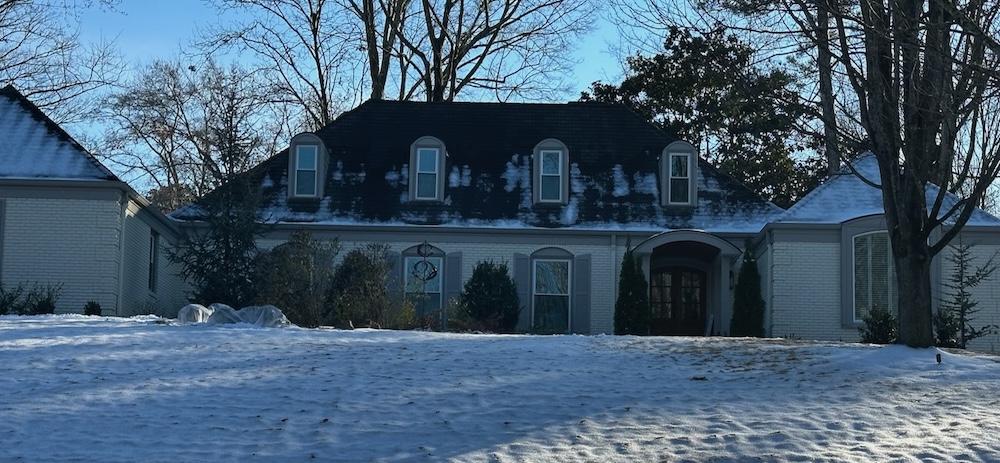
Heat escaping into the attic doesn’t just affect energy efficiency — it directly impacts your roof.
When attic temperatures rise:
- Snow melts unevenly on the roof
- Meltwater refreezes at cold roof edges
- Ice dams form
- Water backs up under shingles
- Roof decking absorbs moisture
Over time, this leads to:
- Shingle deterioration
- Rotting decking
- Mold growth
- Fascia and soffit damage
- Interior leaks
Many roof replacements are triggered not by age, but by years of unmanaged attic heat loss.
Condensation: the silent attic destroyer
Warm air holds moisture. When that air reaches the cold attic in winter, moisture condenses on:
- Roof decking
- Nails
- Trusses
- Insulation surfaces
This condensation can:
- Saturate insulation, reducing effectiveness
- Promote mold growth
- Rot wood framing
- Freeze and thaw repeatedly, worsening damage
Homeowners often don’t see this until insulation is removed or roof boards begin to fail.
Why adding insulation alone isn’t enough
Many homeowners try to solve the problem by adding more insulation. While insulation helps, it doesn’t stop heat loss if air leaks remain.
Think of insulation like a blanket — it slows heat transfer, but it doesn’t stop airflow. Warm air will still move through gaps, carrying heat and moisture with it.
True attic heat control requires:
- Air sealing
- Proper insulation depth
- Balanced ventilation
Skipping any one of these leaves money on the table.
Key attic air leak locations
Common heat loss points include:
- Attic access doors and pull-down stairs
- Light fixtures and ceiling fans
- Bathroom exhaust fan housings
- Plumbing vent penetrations
- Chimney chases
- Electrical wiring holes
Sealing these areas often produces immediate improvements in comfort and energy use.
The role of ventilation in heat control
Ventilation doesn’t heat the attic — it removes excess heat and moisture.
A properly ventilated attic:
- Stays closer to outdoor temperature
- Reduces roof deck warming
- Prevents moisture buildup
- Extends roof lifespan
Most older homes have either insufficient ventilation or blocked soffits, making heat loss worse.
Why this becomes an endless winter cost cycle
Without intervention, attic heat loss creates a loop:
- Heat escapes into the attic
- Energy bills rise
- Snow melts and refreezes
- Ice dams form
- Roof damage occurs
- Repairs cost money
- Heat loss continues
Breaking the cycle requires addressing the attic — not just reacting to symptoms.
How professionals identify attic heat loss
A proper attic evaluation includes:
- Insulation depth measurement
- Air leak detection
- Ventilation balance assessment
- Moisture inspection
- Thermal imaging during cold conditions
- Roof edge and ice dam analysis
This approach pinpoints where energy is being lost and how to stop it.
The financial upside of fixing attic heat loss
Homeowners who address attic heat loss typically see:
- Lower monthly energy bills
- More consistent indoor temperatures
- Fewer ice dam problems
- Reduced roof repair costs
- Longer roof lifespan
- Improved indoor air quality
The return on investment often outperforms many other home upgrades.
The bottom line
Attic heat loss is a hidden expense that quietly drains money every winter. It drives high energy bills, creates roof problems, and accelerates damage — all without obvious warning signs.
Fixing attic heat loss isn’t just about comfort. It’s about protecting your roof, your home, and your budget.
Family First Exteriors helps St. Louis homeowners uncover and eliminate attic heat loss with targeted inspections and proven solutions. If your energy bills climb every winter or ice dams keep returning, the attic is where the real problem likely lives.