
April 7, 2026
Vinyl vs. James Hardie Siding: Which Is Right for Your St. Louis Home?
If you’re a St. Louis homeowner thinking about new siding, you’ve probably already started researching your options—and you’ve probably landed on the same two names that dominate the conversation: vinyl siding and James Hardie fiber cement siding. These are far and away the most popular residential siding choices in the greater St. Louis area, and for good reason. Both are proven, widely available, and backed by solid warranties. But they’re fundamentally different products with different strengths, different price points, and different trade-offs.
The right choice depends on your budget, your priorities, your home’s architectural style, and how long you plan to stay in the house. This guide gives you an honest, side-by-side comparison based on what actually matters for homes in the St. Louis climate—not manufacturer marketing materials.
What Is Vinyl Siding?
Vinyl siding is made from polyvinyl chloride (PVC), a durable plastic material that’s been used in residential construction since the 1960s. Modern vinyl siding has come a long way from the thin, easily faded panels of decades past. Today’s premium vinyl products feature thicker profiles, more realistic wood-grain textures, improved UV resistance, and significantly better color retention than earlier generations.
Vinyl is the most widely installed siding material in the United States, and it’s especially popular in the Midwest. Drive through neighborhoods in Ballwin, Creve Coeur, Des Peres, or Chesterfield and you’ll see vinyl siding on the majority of homes built or re-sided in the last 30 years.
What Is James Hardie Fiber Cement Siding?
James Hardie is the leading manufacturer of fiber cement siding, a composite material made from cement, sand, and cellulose fibers. The result is a rigid, dense board that mimics the look and feel of real wood siding but resists the rot, warping, and insect damage that eventually destroy natural wood in a humid climate like St. Louis.
James Hardie offers several product lines—HardiePlank lap siding is the most common for residential applications—and their ColorPlus Technology provides a factory-applied finish that’s baked on for superior color consistency and fade resistance. The company also engineers region-specific formulations; their HZ5 product line is designed specifically for climates that experience freeze-thaw cycling, which makes it a natural fit for St. Louis homes.
Durability: How Each Material Handles St. Louis Weather
This is where the two materials diverge most significantly, and it’s the factor that matters most in the St. Louis climate.
Vinyl in St. Louis Conditions
Vinyl siding is waterproof, won’t rot, and is impervious to insect damage. It handles rain and humidity well, which is important in a region that sees 42 inches of annual rainfall. However, vinyl has some well-known vulnerabilities in the St. Louis climate:
- Hail impact: Vinyl can crack or shatter when hit by large hailstones, especially in cold weather when the material becomes more brittle. Given that St. Louis sits in a major hail corridor, this is a real consideration.
- Temperature extremes: Vinyl expands and contracts significantly with temperature changes. In a climate where winter lows can drop below zero and summer highs regularly exceed 95°F, this thermal movement can cause panels to warp, buckle, or loosen from their fasteners over time.
- Wind resistance: Standard vinyl siding is rated for wind speeds up to around 110 mph, but individual panels can be caught by wind uplift if they’re not properly locked into their tracks. High-wind events during spring and summer storms can peel sections loose.
- Fading: Despite improvements in UV resistance, vinyl siding will gradually fade over time, particularly darker colors on south- and west-facing walls. The fading is permanent—vinyl can’t be painted effectively.
James Hardie in St. Louis Conditions
Fiber cement is inherently more rigid and impact-resistant than vinyl. It handles the St. Louis climate with several notable advantages:
- Hail resistance: The dense, rigid composition of fiber cement makes it significantly more resistant to hail damage than vinyl. It can absorb impacts that would crack or shatter vinyl panels.
- Dimensional stability: Fiber cement doesn’t expand and contract with temperature changes the way vinyl does. Panels stay flat and secure through St. Louis’s extreme temperature swings without buckling or warping.
- Freeze-thaw performance: James Hardie’s HZ5 formulation is specifically engineered for climates with freeze-thaw cycling, using a proprietary process to resist moisture absorption that could lead to cracking during freeze events.
- Fire resistance: Fiber cement is non-combustible, which provides an additional layer of safety that vinyl (a plastic) cannot match.
- Paintability: Unlike vinyl, fiber cement can be repainted when you want to change colors or refresh the appearance. This extends the aesthetic lifespan of the siding almost indefinitely.
The primary durability concern with fiber cement is moisture management during installation. If cut edges aren’t properly primed and sealed, or if flashing details are done incorrectly, moisture can wick into the material over time. This is an installation quality issue, not a material defect—which is why choosing an experienced installer matters.
Appearance and Curb Appeal
Both materials come in a wide range of colors and styles, but they don’t look the same up close.
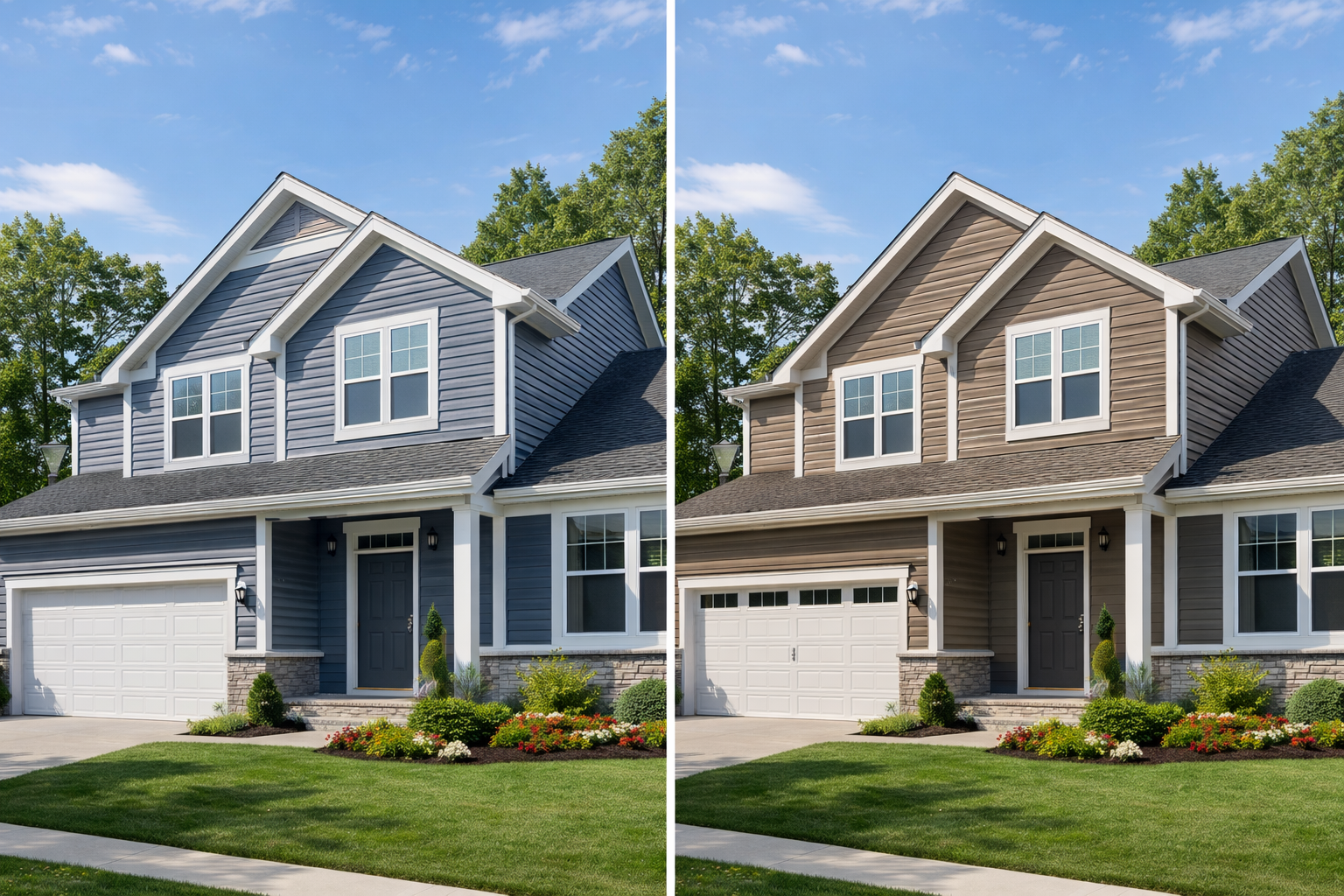
Vinyl siding has a characteristic slight sheen and a uniform texture that, despite improvements in wood-grain embossing, is recognizable as vinyl to most people. The panels are lightweight and hollow-backed, which gives them a slightly different shadow profile than real wood. For many homeowners, this is perfectly acceptable—vinyl looks clean and uniform, and from the street, it presents well.
James Hardie fiber cement has a matte finish and a denser, more substantial look that more closely resembles traditional painted wood clapboard. The boards are solid, cast a deeper shadow line, and feel more substantial to the touch. On homes in architecturally distinctive St. Louis neighborhoods—the older bungalows in Maplewood, the Craftsman-style homes in Webster Groves, the colonials in Kirkwood—fiber cement tends to complement the existing character better than vinyl because it reads visually as a wood product rather than a plastic one.
James Hardie’s ColorPlus factory finish also provides more consistent color than field-painted fiber cement or the through-body color of vinyl. The finish resists fading, chipping, and peeling significantly longer than traditional exterior paint, which means the siding maintains its appearance for years before any touch-up is needed.
Cost: The Real Difference
This is where the decision gets real for most families. There is a meaningful cost difference between vinyl and James Hardie, and it’s important to understand what you’re paying for.
Vinyl siding is the more affordable option. Material costs are lower, and installation is faster because the panels are lighter and easier to cut and handle. For a typical St. Louis home, a full vinyl re-siding project will generally cost significantly less than the same project in fiber cement.
James Hardie fiber cement costs more—typically 30 to 50 percent more than vinyl for materials and installation combined. The material itself is heavier and more expensive, and installation takes longer because it requires specialized cutting tools (fiber cement generates silica dust that demands proper safety equipment), additional trim detailing, and more precise flashing work. It’s a more labor-intensive product, and that labor cost is reflected in the final price.
However, when you factor in the longer lifespan, superior hail resistance, and the ability to repaint rather than replace when you want a color change, the total cost of ownership over 30 or 40 years can be comparable. Family First Exteriors can help you run the numbers for your specific home and situation so you can make an informed decision.
Maintenance Requirements
Vinyl is often marketed as maintenance-free, and while that’s mostly accurate, it’s not entirely true. Vinyl siding should be cleaned periodically to prevent mold and mildew buildup (common on north-facing walls in St. Louis’s humid climate), and any panels that crack or become loose need to be replaced promptly to prevent water from getting behind the siding. The trade-off is that when vinyl fades, you can’t repaint it—you can only replace the affected sections or the entire installation.
James Hardie requires periodic inspection of the paint finish and caulking at joints and trim connections. The ColorPlus factory finish is warranted for 15 years, and many homeowners get even longer before repainting is needed. When the time does come, a fresh coat of exterior paint gives the siding a like-new appearance at a fraction of the cost of replacement. Fiber cement should also be cleaned periodically, though its rigid surface resists mildew growth better than vinyl’s textured surface.
Warranty Comparison
Most premium vinyl siding products carry a limited lifetime warranty that covers manufacturing defects, excessive fading, and in some cases, hail damage. However, these warranties are typically prorated—meaning the coverage decreases over time—and they often exclude labor costs for replacement.
James Hardie offers a 30-year non-prorated transferable warranty on the substrate (the board itself) and a 15-year warranty on the ColorPlus finish. The non-prorated structure means you get full coverage for the entire warranty period, not a declining percentage. The transferability is a valuable feature if you sell your home, as the warranty passes to the next owner.
So Which Is Right for Your Home?
There’s no single correct answer—both materials are solid choices that protect your home and improve curb appeal. Here’s a simplified framework to help guide your thinking:
Vinyl may be the better fit if: budget is the primary driver, you’re looking for the lowest upfront cost, your home’s style doesn’t demand the look of real wood, you plan to sell in the near term and want maximum curb appeal improvement per dollar spent, or you’re re-siding a large home and want to keep the project affordable without compromising on quality.
James Hardie may be the better fit if: you want maximum durability and hail resistance in the St. Louis storm corridor, your home has architectural character you want to preserve or enhance (Craftsman, colonial, historic), you plan to stay in the home long-term and want the lowest total cost of ownership over decades, you value the ability to repaint and change colors in the future, or you’re in a neighborhood where fiber cement is the prevailing standard and vinyl could affect resale value.
Many homeowners also choose a combination approach—James Hardie on the front elevation and high-visibility sides, with vinyl on the back and less-visible areas. This balances curb appeal with budget, and it’s a strategy Family First Exteriors can help you plan and execute seamlessly.
Working with Family First Exteriors on Your Siding Project
Siding replacement is one of the most transformative things you can do for the exterior of your home—and one of the most visible. The difference between a great siding job and a mediocre one comes down to installation quality, attention to detail at trim and transition points, and proper integration with the rest of your exterior systems (roofing, gutters, soffit, fascia, and windows).
At Family First Exteriors, we install both vinyl and James Hardie fiber cement siding, and we’ll give you an honest recommendation based on your home, your goals, and your budget. We won’t push you toward the more expensive option if vinyl is the right call, and we won’t cut corners on installation regardless of which material you choose. Our crew foremen have decades of experience, and many of our team members have been with Family First Exteriors for 19 years or more.
We also handle everything connected to a siding project—soffit and fascia replacement, gutter removal and reinstallation, window trim, and any underlying sheathing or moisture barrier work that’s needed. One contractor, one crew, one point of accountability for the entire project.
Get a Free Siding Estimate for Your Home
Contact Family First Exteriors today at familyfirstexteriors.com/contact-us
We install both vinyl and James Hardie fiber cement siding
20% discount for veterans, first responders & seniors | Financing available
Serving Creve Coeur, Des Peres, Wildwood, Ellisville, Kirkwood, Webster Groves, Ballwin, Maplewood, Chesterfield, and the entire greater St. Louis metro area.