
March 25, 2026
Soffit and Fascia Damage: The Hidden Problem Most St. Louis Homeowners Miss
Ask most homeowners in St. Louis what they know about their soffit and fascia, and you’ll likely get a blank stare. These two components sit at the roofline—tucked beneath the overhang and behind the gutters—quietly doing some of the most important work on the entire exterior of your home. And because they’re out of sight, they’re almost always out of mind until something goes seriously wrong.
The problem is that by the time soffit and fascia damage becomes obvious, it’s usually been developing for months or even years. What starts as a small area of moisture exposure or a tiny gap in the soffit panel can quietly escalate into rotted structural wood, pest infestations, compromised attic ventilation, and thousands of dollars in repairs that extend well beyond the roofline itself.
This guide breaks down what your soffit and fascia actually do, how St. Louis weather damages them, what warning signs to look for, and when it’s time to call in a professional.
What Exactly Are Soffit and Fascia?
Before we talk about damage, it helps to understand what these components are and why they matter.
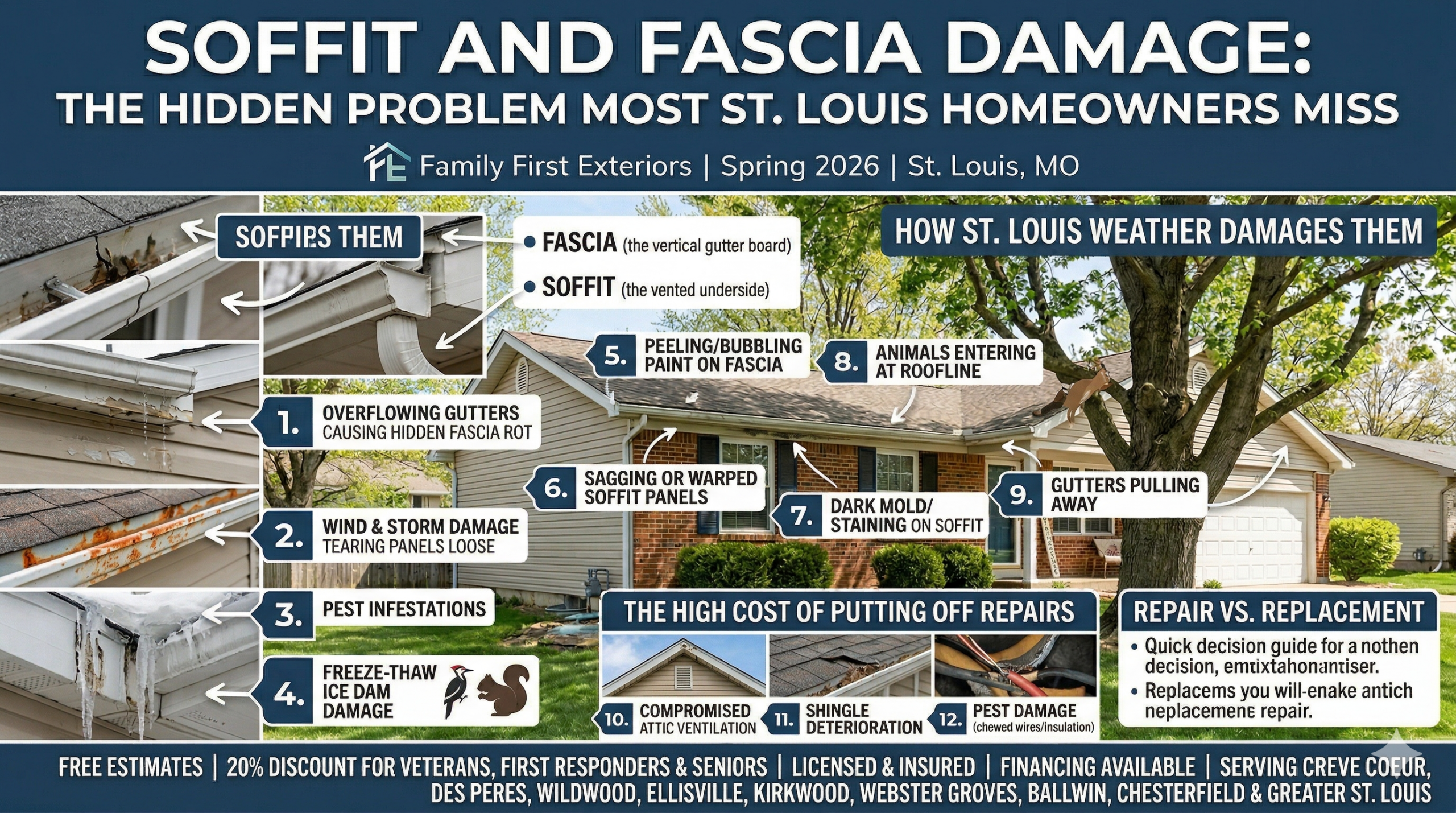
Fascia is the long, straight board that runs along the lower edge of your roofline. It’s the vertical surface you see when you look up at the edge of your roof from the ground. Your gutters are attached directly to the fascia board. It serves two critical functions: it supports the bottom row of roof tiles or shingles, and it provides a solid mounting surface for the gutter system. On most St. Louis homes, fascia is made of wood (often pine or composite lumber), though aluminum and vinyl-wrapped options are becoming more common in newer construction and replacement projects.
Soffit is the underside of your roof’s overhang—the horizontal surface you see when you stand close to your house and look straight up beneath the eaves. Most soffit panels are vented, meaning they have small perforations or slots that allow air to flow into the attic space. This ventilation is essential. It helps regulate attic temperature, prevents moisture buildup, and works with your ridge vents or attic fans to create proper airflow that protects both your roof deck and your insulation.
Together, soffit and fascia form the finished edge of your roofing system. They protect the exposed ends of your rafters from weather, they keep animals and insects out of your attic, and they play a direct role in your home’s energy efficiency through attic ventilation. When either one fails, the consequences ripple through multiple systems.
How St. Louis Weather Damages Your Soffit and Fascia
The greater St. Louis area’s climate is hard on every part of a home’s exterior, but soffit and fascia are uniquely vulnerable because of where they sit. They’re exposed to moisture from above (rain, snowmelt, and ice dams), from the side (wind-driven rain), and from below (humidity and ground-level splash-back). Here’s how the damage typically develops:
Moisture and Rot
Wood fascia boards are the most susceptible component. When gutters overflow, leak at the seams, or pull away from the roofline, water runs down the back side of the fascia—the side you can’t see from the ground. Over time, this persistent moisture exposure causes the wood to soften and rot from the inside out. By the time you notice the paint bubbling or a section of fascia that looks warped, the damage is often well advanced.
Soffit panels are similarly vulnerable. If your roof develops a leak near the eaves, or if ice dams push water under the shingles during winter, that water often ends up dripping down onto the soffit. Persistent moisture can cause wood soffit to rot and vinyl soffit to warp, buckle, or develop mold on the attic-facing side.
Ice and Freeze-Thaw Cycles
St. Louis winters regularly produce the kind of freeze-thaw cycling that accelerates material fatigue. Water that gets into small cracks or gaps in fascia boards or behind soffit panels expands when it freezes, forcing those openings wider. After a winter with 30 or 40 freeze-thaw cycles—which is typical for the St. Louis metro—materials that were in marginal condition going into November can be seriously compromised by March.
Wind and Storm Damage
Strong wind events—common during spring and summer thunderstorm season in St. Louis—can physically tear soffit panels loose from their tracks or peel fascia boards away from the rafter tails. Even if the damage seems minor, any gap in the soffit or fascia creates an entry point for water, pests, and unconditioned air that can cause problems for years if left unaddressed.
Pest Damage
This one catches a lot of St. Louis homeowners off guard. Woodpeckers are notorious for drilling into wood fascia and soffit, particularly in wooded neighborhoods across St. Louis County like Wildwood, Ellisville, and parts of Chesterfield. Squirrels and raccoons can chew through deteriorating soffit panels to access attic spaces, and wasps commonly build nests behind loose fascia or inside soffit gaps. Once the structural integrity of these components starts to fail, they become increasingly attractive to wildlife looking for shelter.
Warning Signs You Shouldn’t Ignore
Most soffit and fascia problems are visible if you know where to look. Here’s what the team at Family First Exteriors recommends checking at least twice a year—once in spring after winter weather has passed, and once in fall before the cold sets in:
- Peeling, bubbling, or flaking paint on the fascia boards. This is often the earliest visible sign of moisture infiltration behind the paint surface.
- Soft spots or spongy areas when you press on the fascia. If the wood gives under light pressure, rot has already set in beneath the surface.
- Visible gaps, holes, or cracks in the soffit panels. Even small openings allow pests, moisture, and unconditioned air into the attic.
- Sagging or warped soffit sections. This typically indicates moisture damage to the underlying structure or failed fasteners.
- Staining, discoloration, or mold growth on the underside of the soffit. Dark streaks or greenish discoloration suggest persistent moisture exposure.
- Evidence of animal activity: droppings near the roofline, scratching sounds in the attic, or visible chew marks on wood surfaces.
- Gutters that are pulling away from the fascia. This can indicate that the fascia board behind the gutter has rotted and can no longer hold fasteners securely.
- Increased energy bills or uneven temperatures in your home. Damaged or missing soffit vents reduce attic airflow, which forces your HVAC system to work harder year-round.
Why Putting Off Repairs Costs More in the Long Run
Soffit and fascia repairs are one of those home maintenance items that homeowners tend to delay because the damage doesn’t feel urgent. The roof isn’t leaking into the living room, the walls aren’t caving in, and everything looks mostly fine from the street. But here’s what happens when damaged soffit or fascia goes unaddressed:
Rotted fascia undermines your gutter system. Gutters are only as strong as the surface they’re mounted to. Once the fascia softens from rot, gutter fasteners lose their grip. Sections start to sag, pull away, and eventually fail. Now you’re replacing both the fascia and the gutters—a significantly larger project than catching the fascia rot early.
Compromised soffit kills your attic ventilation. When soffit vents are blocked by damage, debris, or pest nests, hot air gets trapped in the attic during summer and moisture builds up during winter. In summer, that trapped heat radiates down into your living space and drives up cooling costs. In winter, the trapped moisture can lead to mold growth on the underside of the roof deck and premature deterioration of your shingles from below—damage that’s invisible until a roofer gets up there and sees it.
Open gaps invite pests into your attic. Once squirrels, raccoons, birds, or insects establish themselves in your attic, removing them and repairing the damage they cause—chewed wiring, contaminated insulation, damaged ductwork—can cost far more than the soffit repair that would have kept them out in the first place.
Repair vs. Full Replacement: What Makes Sense?
Like gutters, the repair-or-replace decision for soffit and fascia depends on the extent of the damage and the overall condition of the materials.
Targeted repair works well when the damage is limited to a specific section—say, a few feet of fascia near a leaking gutter joint, or a single soffit panel that was knocked loose by wind. If the rest of the system is in good shape and the underlying rafters and structural wood are sound, a spot repair is efficient and cost-effective.
Full replacement is the better path when damage is widespread, when the materials are original to an older home and have reached the end of their lifespan, or when you’re already doing roofing or gutter work and want to upgrade everything at once for a clean, integrated result. Many homeowners in established St. Louis neighborhoods like Kirkwood, Webster Groves, Des Peres, and Creve Coeur find that a full soffit and fascia replacement—often combined with new gutters—transforms the entire appearance of the roofline and eliminates recurring maintenance headaches.
Modern replacement materials, including aluminum-wrapped fascia and vented vinyl soffit, offer significant advantages over the original wood components found on many St. Louis homes. They resist rot, require minimal maintenance, and come in a wide range of colors to match your exterior. Family First Exteriors can walk you through the material options and help you choose what works best for your home and budget.
Why Work with Family First Exteriors for Soffit and Fascia Projects?
Soffit and fascia work requires precision. These components have to integrate seamlessly with your roofing, gutters, and siding for the entire exterior envelope to function properly. A sloppy installation leaves gaps that invite the same moisture and pest problems you’re trying to solve.
Family First Exteriors is a full-service residential exterior company, which means we understand how all of these systems work together. Our crew foremen have decades of experience, and many team members have been with us for 19 years or more. When we inspect your soffit and fascia, we’re also evaluating the condition of your roof edge, flashing, gutters, and siding—because problems in one area almost always affect the others.
We’ll give you an honest assessment of what needs attention now, what can wait, and what your options are. No pressure, no upselling. That’s been our approach since day one, and it’s why families across St. Louis continue to trust us with their homes.
Schedule a Free Soffit & Fascia Inspection
Contact Family First Exteriors today at familyfirstexteriors.com/contact-us
We offer a 20% discount to veterans, first responders, and senior citizens.
Serving Creve Coeur, Des Peres, Wildwood, Ellisville, Kirkwood, Webster Groves, Ballwin, Chesterfield, and the entire greater St. Louis metro area.