
January 12, 2026
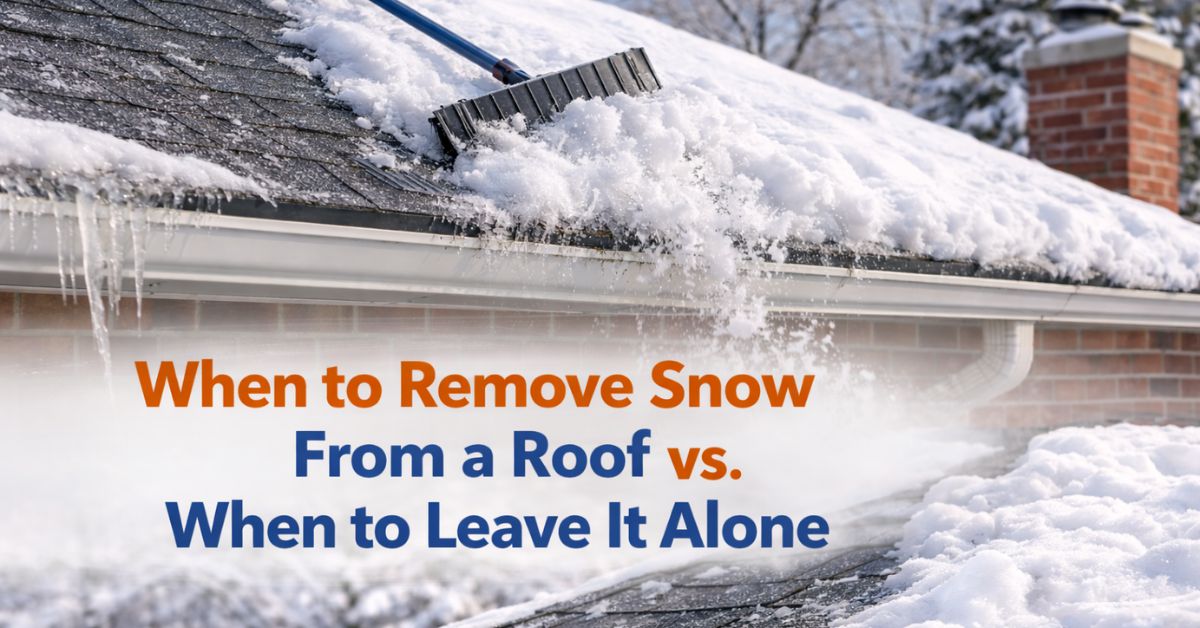
When to Remove Snow From a Roof vs. When to Leave It Alone
After a heavy snowfall, many homeowners look up at their roof and ask the same question: Should I remove the snow, or is it safer to leave it alone?
The answer isn’t always obvious — and getting it wrong can lead to roof damage, leaks, or even personal injury. In St. Louis, where winter weather often includes wet snow, freeze-thaw cycles, and fluctuating temperatures, knowing when to act (and when not to) is especially important.
This guide breaks down when snow removal is necessary, when it’s better to leave snow alone, and how to make smart decisions that protect both your roof and your safety.
Why snow on a roof isn’t always a problem
Contrary to popular belief, snow itself isn’t automatically dangerous to a roof. Most modern residential roofs in Missouri are designed to handle typical snow loads. In fact, a layer of snow can sometimes act as insulation, keeping roof surfaces cold and reducing the chance of ice dams.
Problems arise not from snow sitting still, but from:
- Snow melting unevenly
- Water refreezing at roof edges
- Excessive weight from heavy, wet snow
- Ice accumulation blocking drainage
Understanding the difference is key.
When it’s usually safe to leave snow on the roof
In many situations, leaving snow alone is actually the safest option.
You can typically leave snow on the roof when:
- The snow is light and powdery
- There are no visible ice dams
- Gutters and downspouts are not blocked with ice
- There are no interior leaks or ceiling stains
- The roof structure shows no sagging
- Snow coverage is even across the roof surface
Attempting to remove snow unnecessarily can damage shingles, dislodge flashing, or compromise roof seals — especially if done with improper tools.
When snow removal becomes necessary
There are specific scenarios where snow removal is not only helpful, but critical.
You should consider removing snow when:
1. Ice dams are forming
If you see thick ridges of ice along the roof edge or large icicles hanging from gutters, water is backing up under the shingles. Snow removal near the eaves can reduce further ice buildup.
2. Heavy, wet snow accumulates
Wet snow is far heavier than dry snow. Multiple storms in a short period can overload the roof, particularly on older homes or flat and low-slope roofs.
3. Water is leaking inside
If you notice water stains, dripping, or damp insulation during or after snowmelt, snow removal may help reduce additional water intrusion — but the underlying issue still needs professional attention.
4. Flat or low-slope roofs are involved
Flat roofs, common on some St. Louis city homes and additions, don’t shed snow well. Snow can pool, melt, refreeze, and create structural stress if left too long.
5. Gutters are frozen solid
If gutters are clogged with ice and snow, meltwater has nowhere to go. Removing snow just above the gutter line can help restore drainage temporarily.
Situations where snow removal can cause more harm than good
Snow removal isn’t risk-free — and in some cases, it makes things worse.
Avoid roof snow removal when:
- You must climb onto a steep or icy roof
- You don’t have proper tools
- The roof surface is brittle from cold temperatures
- Shingles are already aged or curling
- You’re using metal shovels or sharp tools
Scraping shingles can remove protective granules, tear seals, and shorten roof lifespan. Walking on icy roofs is also a major fall hazard — one of the most common winter homeowner injuries.
The right way to remove snow (when it’s necessary)
If snow removal is truly needed, it must be done carefully.
Best practices include:
- Use a roof rake from the ground whenever possible
- Remove snow only 3–4 feet up from the roof edge, not the entire roof
- Work gradually — don’t scrape down to bare shingles
- Avoid breaking ice aggressively
- Never chip at frozen shingles or flashing
The goal is reducing pressure and improving drainage, not stripping the roof clean.
Why snow removal alone doesn’t solve most winter roof problems
Many homeowners focus on snow removal when the real issue is heat escaping from the home. Warm air rising into the attic melts snow from underneath, leading to ice dams and leaks.
Common root causes include:
- Poor attic insulation
- Air leaks around fixtures or attic hatches
- Inadequate ventilation
- Blocked soffit vents
Without addressing these, snow removal becomes a temporary fix — and the problem returns with the next storm.
Signs you need a professional winter roof inspection
Snow removal is only part of the picture. It’s time to call a professional if you notice:
- Repeated ice dams every winter
- Uneven snow melting patterns
- Overflowing gutters during freeze-thaw cycles
- Persistent ceiling stains
- Drafty upper floors
- High winter energy bills
A professional inspection can identify whether insulation, ventilation, flashing, or drainage is the true source of the problem.
Why St. Louis homes need a tailored approach
St. Louis winters are unpredictable. One week may bring freezing temperatures, the next may bring rain and rapid melting. Homes with brick construction, limited overhangs, or older roof systems are especially vulnerable.
Neighborhoods like Benton Park, The Hill, Soulard, Clayton, and University City often experience winter roof issues not because of snow quantity, but because of how heat and moisture move through older structures.
The bottom line
Snow on your roof isn’t always dangerous — but ignoring warning signs can be costly. Knowing when to leave snow alone and when to act protects your roof, your home, and your safety.
If snow is sitting quietly and evenly, leave it.
If ice dams, leaks, or heavy buildup appear, take action — carefully and strategically.
And if winter roof problems keep returning, snow removal isn’t the real solution. Identifying and fixing heat loss, insulation gaps, and ventilation issues is.
Family First Exteriors helps St. Louis homeowners make the right call every winter. If you’re unsure whether snow removal is necessary — or if your roof is sending warning signs — a professional inspection can give you clarity before damage sets in.