
December 24, 2025
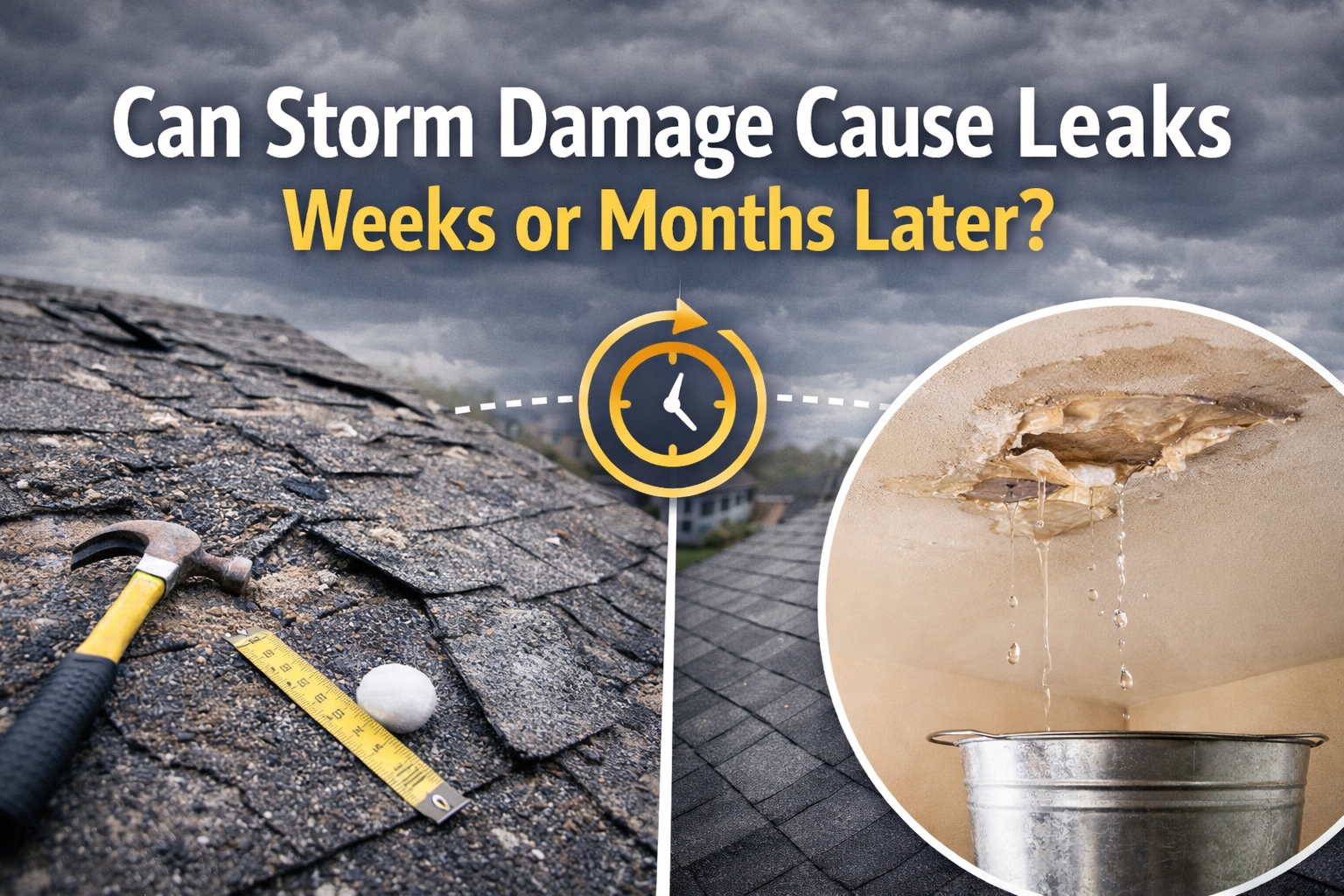
Can Storm Damage Cause Leaks Weeks or Months Later
Yes. Storm damage can cause roof leaks weeks or even months after the original weather event. This delayed damage is common in the St. Louis area and often catches homeowners off guard because the roof appears fine right after the storm.
Understanding how and why this happens helps you act before small problems turn into expensive interior repairs.
Why Leaks Do Not Always Show Up Right Away
Storm damage does not always create an immediate opening.
Hail and wind often weaken roofing materials without fully breaking them. Shingles may look intact, but their protective layers can be compromised. Over time, normal rain, temperature changes, and wind expose these weak points.
In Missouri, rapid shifts between heat, rain, and freezing temperatures accelerate this process.
How Hail Damage Leads to Delayed Leaks
Hail impacts do more than knock off granules.
Common hail-related issues include:
- Bruised shingles with fractured asphalt mats
- Hairline cracks beneath the surface
- Granule loss that exposes the shingle base
Water slowly works through these damaged areas. Leaks often appear during heavier rain weeks later, not during the initial storm.
How Wind Damage Creates Hidden Leak Paths
Wind damage is one of the most overlooked causes of delayed leaks.
Strong winds can:
- Lift shingles without tearing them off
- Break factory seal strips
- Create small gaps at shingle edges
Once seals fail, shingles move during every storm. Water follows nail lines and seams until it reaches the decking, insulation, or ceiling.
Flashing Damage Is a Major Culprit
Many delayed leaks come from damaged flashing, not shingles.
Storms can loosen or bend flashing around:
- Chimneys
- Sidewalls
- Roof valleys
- Plumbing and exhaust vents
These areas handle large volumes of water. Even slight displacement can take weeks to reveal itself inside the home.
Why Leaks Often Appear During the Next Big Rain
Homeowners often assume the latest storm caused the leak.
In reality, the earlier storm weakened the roof. The next heavy rain simply exposed the problem. This timing confusion is common during active storm seasons in the St. Louis region.
Interior Signs to Watch For
Delayed leaks usually start small.
Watch for:
- Yellow or brown ceiling stains
- Bubbling or peeling paint
- Damp insulation smells in the attic
- Drips that only appear during heavy rain
Ignoring these early signs allows water to spread behind walls and ceilings.
Why Waiting Can Make Damage Worse
Once water enters the roofing system, damage compounds.
Ongoing moisture can:
- Rot roof decking
- Weaken structural components
- Promote mold growth
- Increase repair scope and cost
What starts as a small repair can turn into partial replacement if left unaddressed.
How Insurance Views Delayed Leaks
Insurance companies often look closely at delayed damage.
They assess:
- Whether the original storm caused the damage
- How long the homeowner waited to act
- Whether maintenance issues contributed
Early inspections and documentation help establish a clear connection between the storm and the damage.
Why Professional Inspections Matter After Storms
Many delayed leaks come from damage that cannot be seen from the ground.
A professional inspection checks:
- Shingle fractures and seal integrity
- Flashing and vent conditions
- Soft metal components
- Decking impact beneath damaged areas
In the St. Louis climate, early inspections prevent small issues from turning into major interior repairs.
The Smart Approach After a Storm
If your home was hit by a hail or windstorm, do not wait for a leak to appear. By the time water reaches your ceiling, the damage has already spread.
Family First Exteriors provides storm damage inspections for St. Louis homeowners, helping identify hidden issues early so repairs can be addressed before leaks cause further damage.